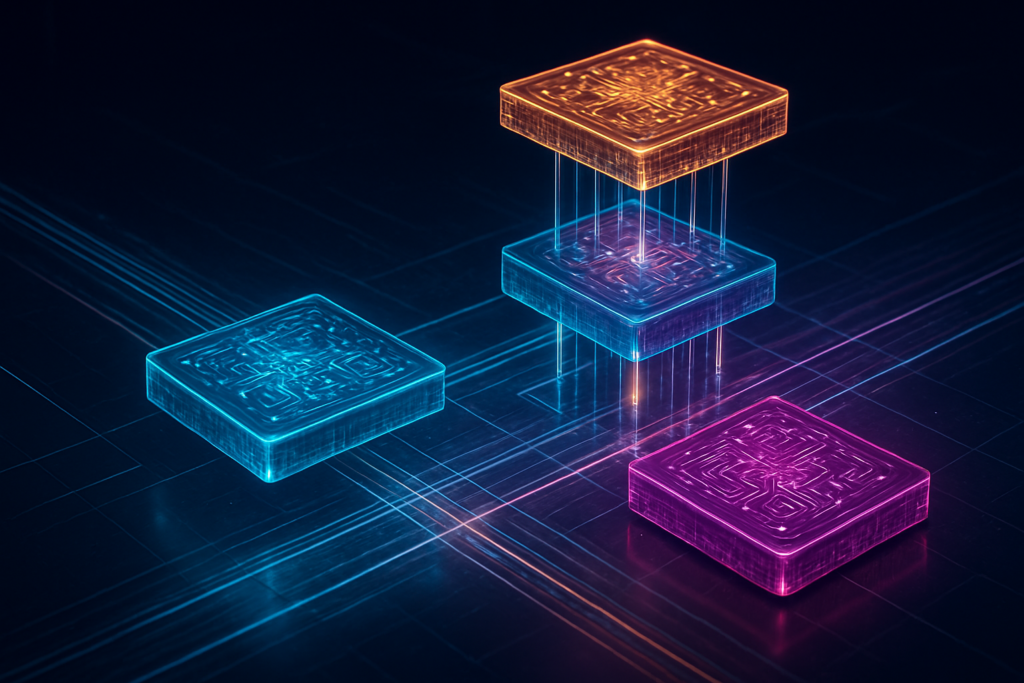
As of January 22, 2026, the semiconductor industry has reached a definitive turning point: the era of the monolithic processor—a single, massive slab of silicon—is officially coming to a close. In its place, the Universal Chiplet Interconnect Express (UCIe) standard has emerged as the architectural backbone of the next generation of artificial intelligence hardware. By providing a standardized, high-speed "language" for different chips to talk to one another, UCIe is enabling a "Silicon Lego" approach that allows technology giants to mix and match specialized components, drastically accelerating the development of AI accelerators and high-performance computing (HPC) systems.
This shift is more than a technical upgrade; it represents a fundamental change in how the industry builds the brains of AI. As the demand for larger large language models (LLMs) and complex multi-modal AI continues to outpace the limits of traditional physics, the ability to combine a cutting-edge 2nm compute die from one vendor with a specialized networking tile or high-capacity memory stack from another has become the only viable path forward. However, this modular future is not without its growing pains, as engineers grapple with the physical limitations of "warpage" and the unprecedented complexity of integrating disparate silicon architectures into a single, cohesive package.
Breaking the 2nm Barrier: The Technical Foundation of UCIe 2.0 and 3.0
The technical landscape in early 2026 is dominated by the implementation of the UCIe 2.0 specification, which has successfully moved chiplet communication into the third dimension. While earlier versions focused on 2D and 2.5D integration, UCIe 2.0 was specifically designed to support "3D-native" architectures. This involves hybrid bonding with bump pitches as small as one micron, allowing chiplets to be stacked directly on top of one another with minimal signal loss. This capability is critical for the low-latency requirements of 2026’s AI workloads, which require massive data transfers between logic and memory at speeds previously impossible with traditional interconnects.
Unlike previous proprietary links—such as early versions of NVLink or Infinity Fabric—UCIe provides a standardized protocol stack that includes a Physical Layer, a Die-to-Die Adapter, and a Protocol Layer that can map directly to CXL or PCIe. The current implementation of UCIe 2.0 facilitates unprecedented power efficiency, delivering data at a fraction of the energy cost of traditional off-chip communication. Furthermore, the industry is already seeing the first pilot designs for UCIe 3.0, which was announced in late 2025. This upcoming iteration promises to double bandwidth again to 64 GT/s per pin, incorporating "runtime recalibration" to adjust power and signal integrity on the fly as thermal conditions change within the package.
The reaction from the industry has been one of cautious triumph. While experts at major research hubs like IMEC and the IEEE have lauded the standard for finally breaking the "reticle limit"—the physical size limit of a single silicon wafer exposure—they also warn that we are entering an era of "system-in-package" (SiP) complexity. The challenge has shifted from "how do we make a faster transistor?" to "how do we manage the traffic between twenty different transistors made by five different companies?"
The New Power Players: How Tech Giants are Leveraging the Standard
The adoption of UCIe has sparked a strategic realignment among the world's leading semiconductor firms. Intel Corporation (NASDAQ: INTC) has emerged as a primary beneficiary of this trend through its IDM 2.0 strategy. Intel’s upcoming Xeon 6+ "Clearwater Forest" processors are the flagship example of this new era, utilizing UCIe to connect various compute tiles and I/O dies. By opening its world-class packaging facilities to others, Intel is positioning itself not just as a chipmaker, but as the "foundry of the chiplet era," inviting rivals and partners alike to build their chips on its modular platforms.
Meanwhile, NVIDIA Corporation (NASDAQ: NVDA) and Advanced Micro Devices, Inc. (NASDAQ: AMD) are locked in a fierce battle for AI supremacy using these modular tools. NVIDIA's newly announced "Rubin" architecture, slated for full rollout throughout 2026, utilizes UCIe 2.0 to integrate HBM4 memory directly atop GPU logic. This 3D stacking, enabled by TSMC’s (NYSE: TSM) advanced SoIC-X platform, allows NVIDIA to pack significantly more performance into a smaller footprint than the previous "Blackwell" generation. AMD, a long-time pioneer of chiplet designs, is using UCIe to allow its hyperscale customers to "drop in" their own custom AI accelerators alongside AMD's EPYC CPU cores, creating a level of hardware customization that was previously reserved for the most expensive boutique designs.
This development is particularly disruptive for networking-focused firms like Marvell Technology, Inc. (NASDAQ: MRVL) and design-IP leaders like Arm Holdings plc (NASDAQ: ARM). These companies are now licensing "UCIe-ready" chiplet designs that can be slotted into any major cloud provider's custom silicon. This shifts the competitive advantage away from those who can build the largest chip toward those who can design the most efficient, specialized "tile" that fits into the broader UCIe ecosystem.
The Warpage Wall: Physical Challenges and Global Implications
Despite the promise of modularity, the industry has hit a significant physical hurdle known as the "Warpage Wall." When multiple chiplets—often manufactured using different processes or materials like Silicon and Gallium Nitride—are bonded together, they react differently to heat. This phenomenon, known as Coefficient of Thermal Expansion (CTE) mismatch, causes the substrate to bow or "warp" during the manufacturing process. As packages grow larger than 55mm to accommodate more AI power, this warpage can lead to "smiling" or "crying" bowing, which snaps the delicate microscopic connections between the chiplets and renders the entire multi-thousand-dollar processor useless.
This physical reality has significant implications for the broader AI landscape. It has created a new bottleneck in the supply chain: advanced packaging capacity. While many companies can design a chiplet, only a handful—primarily TSMC, Intel, and Samsung Electronics (KRX: 005930)—possess the sophisticated thermal management and bonding technology required to prevent warpage at scale. This concentration of power in packaging facilities has become a geopolitical concern, as nations scramble to secure not just chip manufacturing, but the "advanced assembly" capabilities that allow these chiplets to function.
Furthermore, the "mix and match" dream faces a legal and business hurdle: the "Known Good Die" (KGD) liability. If a system-in-package containing chiplets from four different vendors fails, the industry is still struggling to determine who is financially responsible. This has led to a market where "modular subsystems" are more common than a truly open marketplace; companies are currently preferring to work in tight-knit groups or "trusted ecosystems" rather than buying random parts off a shelf.
Future Horizons: Glass Substrates and the Modular AI Frontier
Looking toward the late 2020s, the next leap in overcoming these integration challenges lies in the transition from organic substrates to glass. Intel and Samsung have already begun demonstrating glass-core substrates that offer exceptional flatness and thermal stability, potentially reducing warpage by 40%. These glass substrates will allow for even larger packages, potentially reaching 100mm x 100mm, which could house entire AI supercomputers on a single interconnected board.
We also expect to see the rise of "AI-native" chiplets—specialized tiles designed specifically for tasks like sparse matrix multiplication or transformer-specific acceleration—that can be updated independently of the main processor. This would allow a data center to upgrade its "AI engine" chiplet every 12 months without having to replace the more expensive CPU and networking infrastructure, significantly lowering the long-term cost of maintaining cutting-edge AI performance.
However, experts predict that the biggest challenge will soon shift from hardware to software. As chiplet architectures become more heterogeneous, the industry will need "compiler-aware" hardware that can intelligently route data across the UCIe fabric to minimize latency. The next 18 to 24 months will likely see a surge in software-defined hardware tools that treat the entire SiP as a single, virtualized resource.
A New Chapter in Silicon History
The rise of the UCIe standard and the shift toward chiplet-based architectures mark one of the most significant transitions in the history of computing. By moving away from the "one size fits all" monolithic approach, the industry has found a way to continue the spirit of Moore’s Law even as the physical limits of silicon become harder to surmount. The "Silicon Lego" era is no longer a distant vision; it is the current reality of the AI industry as of 2026.
The significance of this development cannot be overstated. It democratizes high-performance hardware design by allowing smaller players to contribute specialized "tiles" to a global ecosystem, while giving tech giants the tools to build ever-larger AI models. However, the path forward remains littered with physical challenges like multi-chiplet warpage and the logistical hurdles of multi-vendor integration.
In the coming months, the industry will be watching closely as the first glass-core substrates hit mass production and the "Known Good Die" liability frameworks are tested in the courts and the market. For now, the message is clear: the future of AI is not a single, giant chip—it is a community of specialized chiplets, speaking the same language, working in unison.
This content is intended for informational purposes only and represents analysis of current AI developments.
TokenRing AI delivers enterprise-grade solutions for multi-agent AI workflow orchestration, AI-powered development tools, and seamless remote collaboration platforms.
For more information, visit https://www.tokenring.ai/.