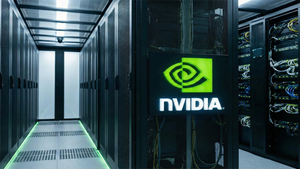
As of February 16, 2026, the financial markets are witnessing a pivotal moment in the infrastructure of artificial intelligence. While NVIDIA remains the face of AI compute, Arista Networks (NYSE: ANET) has emerged as the indispensable architect of the high-speed data highways that connect those chips. Following a blowout Q4 2025 earnings report last week, Arista’s stock surged by more than 10%, solidifying its position as a top-tier performer in the technology sector.
Arista’s recent momentum is not merely a short-term spike; it represents a fundamental market shift. For years, the debate in AI data centers focused on InfiniBand—a proprietary networking technology dominated by NVIDIA—versus Ethernet. Today, the verdict is increasingly leaning toward Ethernet for massive-scale AI clusters, a domain where Arista is the undisputed leader. With its software-first approach and a client list that includes the world’s largest "Cloud Titans," Arista is navigating the AI revolution with surgical precision.
Historical Background
Arista Networks was founded in 2004 by three industry legends: Andy Bechtolsheim (the first investor in Google and co-founder of Sun Microsystems), David Cheriton (a billionaire Stanford professor), and Kenneth Duda. The company was born from a realization that legacy networking hardware was too rigid for the burgeoning era of cloud computing.
In 2008, Jayshree Ullal, a former high-ranking executive at Cisco, joined as CEO. Under her leadership, Arista focused on a "software-driven" philosophy, building their entire product line around a single operating system called EOS (Extensible Operating System). This was a radical departure from competitors like Cisco, which managed multiple disparate operating systems. Arista went public in 2014, and over the subsequent decade, it evolved from a "Cisco killer" in the financial services niche into the primary networking supplier for the global hyperscale cloud market.
Business Model
Arista’s business model is built on high-performance switching and routing platforms, but its secret sauce is software. Unlike traditional hardware vendors that sell boxes, Arista sells a unified software environment.
- Revenue Sources: The company generates roughly 85% of its revenue from product sales (switches and routers) and 15% from recurring service and software subscriptions.
- Customer Base: Arista’s revenue is highly concentrated among "Cloud Titans"—specifically Microsoft and Meta Platforms. As of 2025, these two giants accounted for nearly 48% of Arista’s total revenue.
- Segments: While high-speed data center switching remains the core, Arista has successfully expanded into "Campus" networking (enterprise offices) and "Cloud Adjacent" markets, providing a holistic networking stack from the data center to the edge.
Stock Performance Overview
Over the past decade, ANET has been one of the most consistent wealth-creators in the tech sector.
- 10-Year Horizon: Investors who bought in early 2016 have seen gains exceeding 1,200%, vastly outperforming the S&P 500 and even most semiconductor indices.
- 5-Year Horizon: The stock has benefited immensely from the post-pandemic digital acceleration and the AI boom, with a CAGR (Compound Annual Growth Rate) of approximately 45%.
- Recent Performance: The 10% gain in early February 2026 pushed the stock to all-time highs, reflecting the market’s realization that Arista is capturing a larger share of the AI "back-end" network spend than previously anticipated.
Financial Performance
Arista’s financial health is a masterclass in operating leverage. In its Q4 2025 results, the company achieved a historic milestone: its first-ever $1 billion quarterly net income.
- Revenue Growth: 2025 revenue hit $9.01 billion, a 28.6% increase year-over-year.
- Profitability: The company maintains an enviable non-GAAP gross margin of 64.6% and an operating margin of 48.2%.
- AI Trajectory: Most importantly, Arista doubled its AI networking revenue target for 2026 to $3.25 billion, up from an earlier forecast of $1.5 billion.
- Balance Sheet: Arista remains debt-free with a cash hoard exceeding $6 billion, providing it with the flexibility to navigate supply chain fluctuations or pursue strategic acquisitions.
Leadership and Management
The stability of Arista’s leadership is a key pillar of investor confidence. CEO Jayshree Ullal has steered the company for nearly 18 years, making her one of the longest-tenured and most respected female CEOs in technology. She is flanked by CTO Kenneth Duda and Chairman Andy Bechtolsheim, ensuring the company remains at the bleeding edge of engineering.
Management is known for its "under-promise and over-deliver" culture. They have historically been conservative with guidance, which often leads to the massive post-earnings "beats" that drive stock surges like the one seen last week.
Products, Services, and Innovations
Arista’s competitive advantage lies in its ability to handle the "east-west" traffic of modern data centers—the communication between servers—which has exploded with AI.
- 800G Adoption: Arista is currently in the volume ramp phase of its 800-Gigabit Ethernet products. The 7800 R4 Spine, launched in late 2025, is the flagship modular chassis designed for massive AI clusters.
- 1.6T Roadmap: During the February 2026 earnings call, management confirmed that 1.6-Terabit switching is "imminent," with production deployments expected by the end of 2026.
- EOS and CloudVision: Arista’s software allows for "hitless" upgrades and deep telemetry, meaning data centers can be updated and monitored without downtime—a critical requirement for training trillion-parameter AI models.
Competitive Landscape
The networking market is currently a three-horse race, though each player occupies a different lane:
- NVIDIA (NVDA): While NVIDIA dominates the "front-end" network (connecting GPUs) with InfiniBand, it is aggressively pushing its Spectrum-X Ethernet platform to compete with Arista.
- Cisco (CSCO): The legacy incumbent is attempting to pivot to AI with its Silicon One architecture. However, Arista continues to win on performance and software simplicity in the hyperscale segment.
- White Box/Internal Solutions: Hyperscalers like Google sometimes design their own chips. Arista counters this by offering "disaggregated" software that can run on various silicon.
Arista’s strength is its "Switzerland" status; it works with all silicon providers (Broadcom, NVIDIA, Intel) while providing a superior software layer.
Industry and Market Trends
The most significant trend favoring Arista is the Ethernet for AI movement. Historically, AI training used InfiniBand because it offered lower latency. However, as AI clusters grow to 50,000 or 100,000 GPUs, the management and reliability of Ethernet become superior. The Ultra Ethernet Consortium (UEC), of which Arista is a founding member, is standardizing Ethernet for AI, effectively eroding NVIDIA's InfiniBand moat.
Furthermore, the rise of "Specialized AI Clouds"—providers like Oracle and xAI—has created a secondary tier of high-growth customers for Arista, reducing its over-reliance on just Microsoft and Meta.
Risks and Challenges
No investment is without risk, and Arista faces several headwinds:
- Customer Concentration: Despite diversification efforts, nearly half of its revenue comes from two companies. A slowdown in capex at Meta or Microsoft would be catastrophic for ANET.
- Supply Chain / Memory: CEO Jayshree Ullal recently referred to high-bandwidth memory and advanced silicon as "the new gold." Shortages in these components can delay Arista’s product deliveries.
- NVIDIA’s Bundling: NVIDIA has the power to bundle its GPUs with its own networking gear, potentially freezing Arista out of some deployments.
Opportunities and Catalysts
- 1.6T Cycle: The upcoming transition from 800G to 1.6T in late 2026 and 2027 represents a massive replacement cycle that will drive revenue growth for several years.
- Enterprise AI: While hyperscalers are the current focus, Fortune 500 companies are just beginning to build their private AI clouds. Arista’s "Campus" business is well-positioned to capture this enterprise spend.
- M&A Potential: With over $6 billion in cash, Arista could acquire specialized AI software or cybersecurity firms to further expand its margin profile and platform stickiness.
Investor Sentiment and Analyst Coverage
Following the February 2026 surge, analyst sentiment has reached a fever pitch. Major firms including Bank of America and Wells Fargo have raised their price targets to the $185–$190 range. Analysts are particularly impressed by Arista’s "operating leverage," noting that the company is growing its bottom line significantly faster than its headcount or R&D spend.
Institutional ownership remains high, with heavyweights like Vanguard and BlackRock maintaining large positions. Retail sentiment is also bullish, as Arista is increasingly viewed as the safest way to play the AI infrastructure "arms race" without the volatility of the chipmakers.
Regulatory, Policy, and Geopolitical Factors
As a hardware company, Arista is sensitive to geopolitical tensions.
- Manufacturing: While Arista uses contract manufacturers globally, it has been diversifying its supply chain away from China to Southeast Asia and Mexico to mitigate tariff risks.
- CHIPS Act: Federal incentives for domestic semiconductor and hardware manufacturing provide a favorable tailwind for Arista’s R&D efforts in the United States.
- Export Controls: Tightening restrictions on high-end AI networking gear being sold to China could limit Arista’s long-term total addressable market in that region, though current demand in the West remains more than sufficient.
Conclusion
Arista Networks (NYSE: ANET) stands at the nexus of the most significant technological shift of the decade. Its recent 10% stock gain is a reflection of a company that has successfully transitioned from a cloud disruptor to an AI titan.
Investors should view Arista as a premium-priced, high-quality play on AI infrastructure. While the valuation is high, it is backed by world-class margins, a clean balance sheet, and a leadership team that has proven its ability to out-engineer and out-maneuver much larger rivals. As the world moves toward 1.6T networking and 100,000-GPU clusters, Arista’s "Ethernet-first" vision is no longer just a strategy—it is the industry standard.
This content is intended for informational purposes only and is not financial advice. As of February 16, 2026, the author holds no position in the securities mentioned.