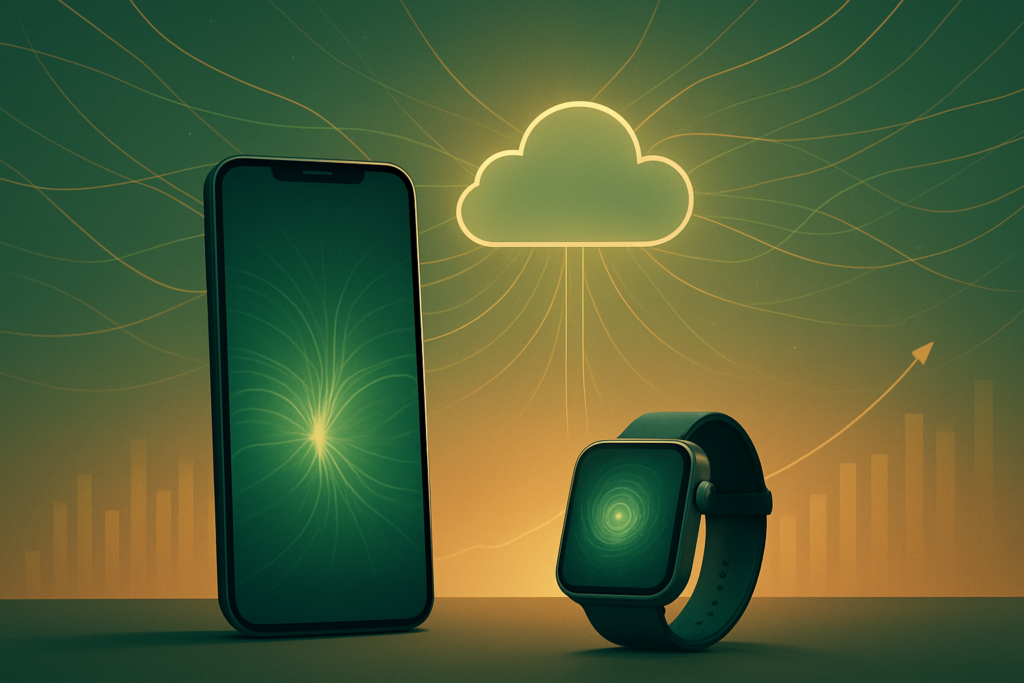
As of January 26, 2026, Apple Inc. (NASDAQ: AAPL) remains the quintessential bellwether of the global technology sector. While many predicted that the "smartphone era" had reached its peak years ago, Apple has consistently defied gravity through a masterful blend of hardware iteration and high-margin services. Today, the company finds itself at a critical crossroads: navigating a post-launch "supercycle" for the iPhone 17 while simultaneously pivoting its entire ecosystem toward "Apple Intelligence." With a market capitalization hovering near historic highs and a landmark partnership with Google (NASDAQ: GOOGL) redefining the capabilities of Siri, Apple is no longer just a hardware manufacturer; it is the gatekeeper of the world’s most personal artificial intelligence.
Historical Background
Founded in 1976 by Steve Jobs, Steve Wozniak, and Ronald Wayne, Apple’s journey from a garage in Los Altos to a multi-trillion-dollar titan is the stuff of corporate legend. The company’s early history was marked by the revolutionary Macintosh and a subsequent period of near-bankruptcy in the 1990s. The return of Steve Jobs in 1997 sparked a "Second Act" unparalleled in business history, producing the iMac, iPod, and—most significantly—the iPhone in 2007.
Under the leadership of Tim Cook, who took the helm in 2011, Apple transitioned from a product-led company to a services-led ecosystem. Cook’s tenure has focused on operational efficiency, supply chain dominance, and the expansion into wearables (Apple Watch, AirPods) and financial services (Apple Card, Apple Pay). By 2026, the company has successfully integrated these disparate threads into a seamless, high-switching-cost environment that analysts call "the walled garden."
Business Model
Apple’s business model operates on a "virtuous cycle" of hardware and software. The primary revenue drivers are:
- Hardware (iPhone, Mac, iPad, Wearables): High-margin devices that serve as the entry point into the ecosystem. The iPhone remains the crown jewel, accounting for roughly 50-55% of total revenue.
- Services (App Store, iCloud, Apple Music, Apple TV+): The fastest-growing and highest-margin segment (gross margins often exceeding 70%). This segment creates recurring revenue and "locks" users into the platform.
- Silicon (Apple Silicon): By designing its own chips (M-series and A-series), Apple controls its hardware-software integration more tightly than any competitor, reducing reliance on third parties like Intel or Qualcomm.
Stock Performance Overview
Over the last decade, AAPL has been a cornerstone of the S&P 500's growth.
- 10-Year Performance: Investors who held Apple since 2016 have seen returns exceeding 800%, driven by massive share buybacks and the expansion of the Services segment.
- 5-Year Performance: The stock doubled between 2021 and 2026, surviving the post-pandemic correction and inflation spikes of 2023.
- 1-Year Performance: As of early 2026, the stock is trading near $248. It has outperformed the broader market over the last 12 months, gaining roughly 22% as the market reacted positively to the iPhone 17 launch and the clarity provided by the Google Gemini partnership.
Financial Performance
Apple’s financial engine remains remarkably robust. For the fiscal first quarter of 2026 (the 2025 holiday quarter), consensus estimates project a record revenue of $139 billion.
- Margins: Gross margins remain healthy at 46%, supported by the shift toward Pro-model iPhones and higher-tier iCloud subscriptions.
- Cash Position: Apple continues to hold a massive cash pile, estimated at $160 billion, which it uses aggressively for share repurchases and dividends.
- Valuation: Trading at a forward P/E of approximately 31x, the stock is considered "richly valued" by some value investors, but bulls argue this is justified by its ecosystem stability and AI potential.
Leadership and Management
Tim Cook remains the steady hand at the helm, now one of the longest-tenured CEOs in the Fortune 500. His focus on ESG (Environmental, Social, and Governance) and operational excellence has made Apple a favorite for institutional investors. Key lieutenants like Jeff Williams (COO) and Greg "Joz" Joswiak (SVP of Worldwide Marketing) continue to execute the company’s vision. However, 2026 has seen increased speculation regarding Cook's eventual successor, with Williams often cited as the most likely candidate to maintain the status quo.
Products, Services, and Innovations
The iPhone 17 series has been the defining product of 2025-2026. Its introduction of 120Hz ProMotion displays across the entire lineup—not just the Pro models—reinvigorated sales for the base models.
- Apple Intelligence: This is the core of Apple’s current innovation. It uses on-device processing to provide personal context to users without compromising privacy.
- The Gemini Partnership: In a pragmatic pivot, Apple integrated Google’s Gemini 3 Pro into Siri for 2026. This allows Siri to handle complex, multi-step queries that require large-scale cloud reasoning, while keeping the personal, sensitive data on the device.
- Wearables: The Apple Watch Series 11, with new hypertension monitoring, continues to dominate the health-tech space, though the Vision Pro (Apple’s spatial computing headset) has struggled to find a mass-market audience in its second year.
Competitive Landscape
Apple faces a bifurcated competitive field.
- Hardware: In the high-end smartphone market, Samsung remains the primary global rival, though Huawei has made a significant resurgence in China.
- AI: Apple is competing with Microsoft (NASDAQ: MSFT) and Google for "AI mindshare." While Microsoft has the lead in productivity AI, Apple’s advantage lies in its proximity to the user—the "edge" device in everyone's pocket.
- Services: Spotify (NYSE: SPOT) and Netflix (NASDAQ: NFLX) remain fierce competitors in the media space, but Apple’s ability to bundle services (Apple One) gives it a unique churn-reduction tool.
Industry and Market Trends
Three trends dominate the 2026 landscape:
- The Silicon Shift: The industry is moving toward "N3P" and "N2" process nodes for chips. Apple’s early reservation of TSMC’s 2nm capacity gives it a two-year lead in power efficiency.
- Generative AI Maturity: The focus has shifted from "chatbots" to "agents" that can take actions. Apple’s OS-level integration is perfectly positioned for this shift.
- Regional Diversification: Apple continues to move production from China to India and Vietnam to mitigate geopolitical risk, a process that is now roughly 25% complete for iPhones.
Risks and Challenges
- Regulatory Scrutiny: The U.S. Department of Justice (DOJ) and the European Commission are aggressively targeting Apple's "walled garden." The EU’s Digital Markets Act (DMA) has already forced Apple to allow third-party app stores, which threatens the 30% "Apple Tax."
- Innovation Saturation: The Vision Pro’s slow adoption suggests that Apple may be struggling to find its next "iPhone-sized" hit.
- China Geopolitics: While sales have rebounded, the risk of retaliatory bans or sudden consumer shifts in the Chinese market remains an ever-present threat.
Opportunities and Catalysts
- The iPhone 18 Cycle: Rumors of a 2nm "A20" chip and further AI enhancements are already building anticipation for late 2026.
- AI Monetization: Analysts expect Apple to introduce a "Siri Premium" or "Apple Intelligence+" subscription tier by 2027, potentially adding billions to high-margin Services revenue.
- Healthcare Integration: The expansion of the Apple Watch into non-invasive glucose monitoring (currently in late-stage trials) would transform the device into a medical necessity for millions.
Investor Sentiment and Analyst Coverage
Wall Street remains largely bullish. As of late January 2026, major firms like Goldman Sachs and Morgan Stanley maintain "Overweight" ratings with price targets ranging from $280 to $315. Institutional ownership remains high, with Vanguard and BlackRock holding significant stakes. Retail sentiment is equally strong, fueled by the seamless integration of AI features that users can actually see and use daily.
Regulatory, Policy, and Geopolitical Factors
In 2026, the intersection of AI and privacy is the new regulatory frontier. Apple is lobbying heavily for its "Private Cloud Compute" standard to be the industry benchmark, hoping to avoid the "surveillance capitalism" labels that plague its peers. Meanwhile, the ongoing DOJ antitrust case is the biggest legal cloud, with a potential multi-year court battle that could eventually force changes to how iMessage and the App Store operate in the United States.
Conclusion
Apple Inc. in 2026 is a company that has successfully bridged the gap between the mobile age and the AI age. The iPhone 17 has proved that hardware refinement, when coupled with meaningful AI utility, can still drive massive consumer demand. While regulatory headwinds in Europe and the U.S. present real risks to the Services revenue model, Apple’s fortress balance sheet and unparalleled user loyalty provide a significant margin of safety. Investors should watch the Q1 2026 earnings report on January 29 for confirmation of the iPhone 17's strength, and keep a close eye on any regulatory developments that could crack the walls of the ecosystem.
This content is intended for informational purposes only and is not financial advice. Today's date is 1/26/2026.