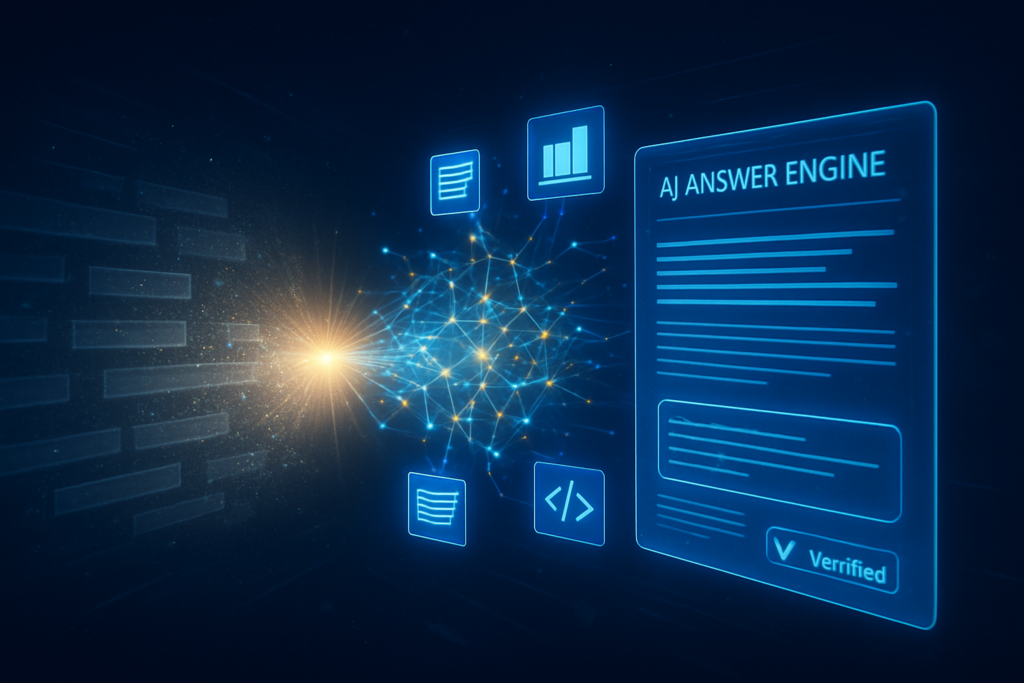
As of early 2026, the digital gateway to human knowledge has undergone its most radical transformation since the invention of the World Wide Web. For decades, searching the internet meant typing keywords into a box and scrolling through "blue links"—a model perfected and dominated by Alphabet Inc. (NASDAQ: GOOGL). However, a seismic shift is underway as users increasingly abandon traditional search engines in favor of "answer engines," led by the meteoric rise of Perplexity AI. By providing direct, synthesized answers backed by real-time citations, Perplexity has challenged the fundamental utility of the traditional search index, forcing a re-evaluation of how information is monetized and consumed.
The rivalry has reached a fever pitch this February, as recent market data indicates that while Google still maintains a massive 90% global market share, its traditional keyword-based query volume has plummeted by 25%. In its place, high-intent users are flocking to platforms that prioritize conclusions over choices. The "zero-click" reality—where a user receives all the information they need without ever clicking through to a source website—has reached an all-time high of 93% in Google’s own AI-integrated results. This evolution marks the end of the "navigation era" and the beginning of the "synthesis era," where the value lies not in finding information, but in the AI’s ability to verify and explain it.
The Technical Shift: From Indexing the Web to Synthesizing It
At the heart of this disruption is a fundamental difference in technical architecture. Traditional search engines like Google function as massive librarians, indexing billions of pages and using complex algorithms to rank which ones are most relevant to a user's query. Perplexity AI, however, operates as a Retrieval-Augmented Generation (RAG) platform. Instead of merely pointing to a page, Perplexity’s engine—powered by its advanced "Pro Search" and "Deep Research" modes—simultaneously analyzes 20 to 50 live web sources for a single query. It then uses state-of-the-art models, including integrations with Claude from Anthropic and GPT-series models from OpenAI, to draft a cohesive, multi-step narrative response.
The defining technical feature of Perplexity is its sophisticated footnoting system. Unlike general-purpose chatbots that often "hallucinate" facts, Perplexity grounds every sentence in a verifiable source. In recent February 2026 audits, the platform maintained a staggering 91.3% accuracy rate for factual citations, a metric that has made it the tool of choice for researchers and finance professionals. To further distance itself from the browser-based past, Perplexity recently launched its "Comet Browser," an AI-native environment designed to automate complex browsing tasks, effectively turning the browser into an autonomous agent rather than a passive window.
This technical departure has forced Google to respond with "AI Overviews" (AIO), powered by its Gemini 3 model. While Google's SGE (Search Generative Experience) attempts to mimic this direct-answer approach, it remains tethered to its legacy advertising business. Industry experts note that Google’s technical challenge is a classic "innovator’s dilemma": the more effectively its AI answers a question, the less reason a user has to click on the ads that generate the company’s multi-billion dollar revenue.
A New Economic Order: Ad Integration and the Revenue War
The shift from links to answers has necessitated a total overhaul of the digital advertising landscape. Perplexity has introduced a novel "Sponsored Questions" model, which avoids the clutter of traditional banner ads. Instead, after providing a cited answer, the engine suggests follow-up queries that are contextually relevant to the user's intent. For example, a query about home office setups might conclude with a sponsored follow-up: "Which ergonomic chairs are currently top-rated on Amazon (NASDAQ: AMZN)?" This preserves the integrity of the primary answer while steering users toward high-conversion commercial pathways.
For Google, the transition has been more turbulent. The tech giant is aggressively integrating ads directly into its AI Overviews, often placing sponsored content above or within the AI-generated summary. This has sparked backlash from advertisers who find their traditional paid links pushed further down the page. Furthermore, the "binary choice" Google has imposed—where publishers cannot opt out of AI training without also disappearing from search results—has drawn the ire of regulators. The UK’s Competition and Markets Authority (CMA) is currently investigating whether this practice constitutes an abuse of market dominance.
The financial stakes are equally high for the publishing industry. Perplexity has attempted to get ahead of copyright concerns with its "Publishers' Program," a $42.5 million revenue-sharing pool. Under its new "Comet Plus" subscription tier, 80% of the revenue is distributed back to content creators based on how often their work is cited or visited by AI agents. This model aims to create a sustainable ecosystem for journalism, a sharp contrast to the ongoing legal battles involving News Corp (NASDAQ: NWSA) and The New York Times (NYSE: NYT), both of whom have filed lawsuits against AI companies for unauthorized scraping.
The Wider Significance: Hallucinations, Lawsuits, and the EU AI Act
The broader AI landscape is currently navigating a period of intense legal and ethical scrutiny. As of February 2, 2026, the industry is bracing for the full enforcement of the EU AI Act’s transparency obligations. Article 50 of the Act now requires companies like Perplexity and Google to provide granular disclosures about the datasets used to train their "answer engines." This move toward transparency is driven by a series of 2025 legal rulings, such as Mavundla v. MEC, which established that professionals like lawyers and doctors are held humanly liable for any AI-generated hallucinations they rely upon.
This legal climate has significantly boosted the market value of Perplexity’s "verified citation" model. As the "hallucination tax" on businesses increases, the demand for AI that can show its work has skyrocketed. However, the tension between AI companies and the media remains a major concern. The litigation from major publishers like the Wall Street Journal centers on "stealth crawlers" that allegedly bypass standard robots.txt instructions to ingest premium content without compensation. The outcome of these cases will likely determine if the future of the web is a collaborative ecosystem or a legal battlefield of "unauthorized ingestion."
Societally, the shift toward answer engines is changing the very nature of literacy and research. We are moving from a world of "search literacy"—knowing how to use operators and keywords—to "verification literacy." Users are no longer rewarded for finding a source, but for being able to critically evaluate the synthesis provided by an AI. This has led to the rise of Answer Engine Optimization (AEO), a new discipline for digital marketers that focuses on structuring content so it can be easily parsed and trusted by large language models (LLMs).
The Road Ahead: Multimodal Search and Autonomous Agents
Looking toward the near future, the competition between Perplexity and Google will likely move beyond text-based answers. The next frontier is multimodal search, where users can point their glasses or phones at an object and receive a synthesized history, price comparison, and repair guide in real-time. Experts predict that by late 2026, "Agentic Search" will become the norm. In this scenario, your search engine won't just tell you which flight is cheapest; it will have the autonomous authority to book it, negotiate a refund, and update your calendar.
However, significant challenges remain. The "echo chamber" effect of AI synthesis is a primary concern for developers. When an AI synthesizes twenty sources into one answer, the nuance and conflicting viewpoints present in the original articles can be lost, leading to a "flattening" of information. Engineers at both Perplexity and Google are currently working on "Perspective Modes" that deliberately highlight dissenting opinions within a cited answer to combat this algorithmic bias.
Closing Thoughts: A New Chapter in Information History
The rise of Perplexity AI and the subsequent transformation of Google Search represent one of the most significant pivots in the history of the information age. We are witnessing the dismantling of the "page-rank" era and the birth of a more conversational, direct, and synthesized relationship with data. While Google’s massive infrastructure and data moats make it a formidable incumbent, Perplexity’s "answer-first" philosophy has successfully redefined user expectations.
In the coming months, the industry will be watching closely as the "Comet Plus" revenue-sharing model matures and as the courts rule on the legality of AI scraping. Whether the future of search remains a centralized monopoly or evolves into a fragmented ecosystem of specialized "answer agents" depends on how these companies balance the needs of users, advertisers, and the publishers who provide the underlying raw material of human knowledge. One thing is certain: the era of the "blue link" is over, and the era of the "cited answer" has arrived.
This content is intended for informational purposes only and represents analysis of current AI developments.
TokenRing AI delivers enterprise-grade solutions for multi-agent AI workflow orchestration, AI-powered development tools, and seamless remote collaboration platforms.
For more information, visit https://www.tokenring.ai/.