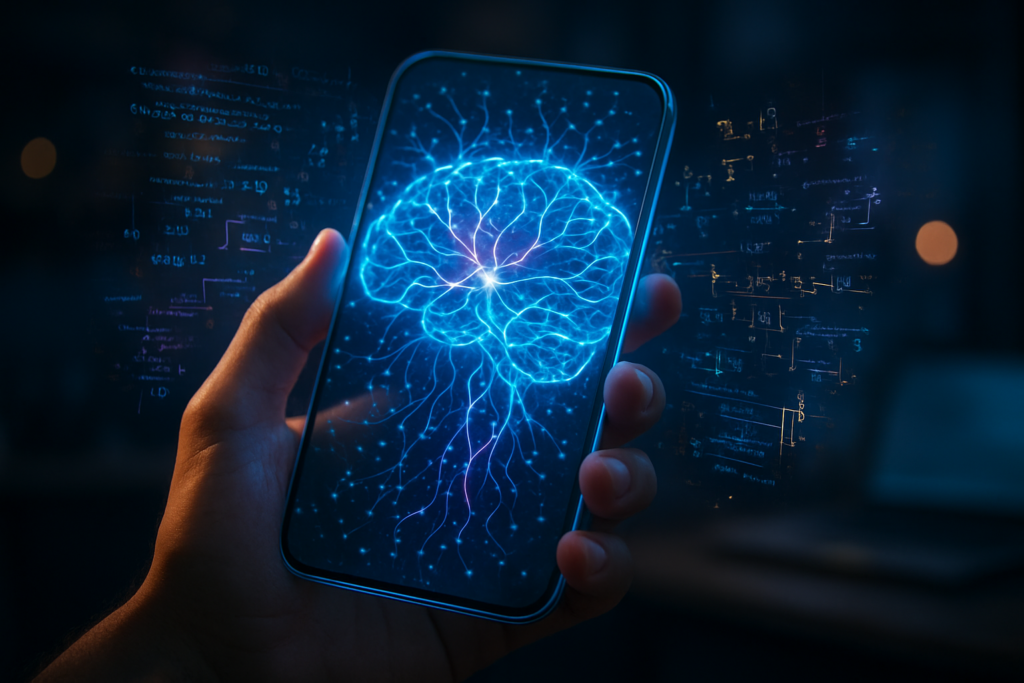
As we enter 2026, the landscape of artificial intelligence has undergone a fundamental shift from massive, centralized data centers to the silicon in our pockets. The "bigger is better" mantra that dominated the early 2020s has been challenged by a new generation of Small Language Models (SLMs) that prioritize efficiency, privacy, and speed. What began as an experimental push by tech giants in 2024 has matured into a standard where high-performance AI no longer requires an internet connection or a subscription to a cloud provider.
This transformation was catalyzed by the release of Meta Platforms, Inc. (NASDAQ: META) Llama 3.2 and Microsoft Corporation (NASDAQ: MSFT) Phi-3 series, which proved that models with fewer than 4 billion parameters could punch far above their weight. Today, these models serve as the backbone for "Agentic AI" on smartphones and laptops, enabling real-time, on-device reasoning that was previously thought to be the exclusive domain of multi-billion parameter giants.
The Engineering of Efficiency: From Llama 3.2 to Phi-4
The technical foundation of the SLM movement lies in the art of compression and specialized architecture. Meta’s Llama 3.2 1B and 3B models were pioneers in using structured pruning and knowledge distillation—a process where a massive "teacher" model (like Llama 3.1 405B) trains a "student" model to retain core reasoning capabilities in a fraction of the size. By utilizing Grouped-Query Attention (GQA), these models significantly reduced memory bandwidth requirements, allowing them to run fluidly on standard mobile RAM.
Microsoft's Phi-3 and the subsequent Phi-4-mini-flash models took a different approach, focusing on "textbook quality" data. Rather than scraping the entire web, Microsoft researchers curated high-quality synthetic data to teach the models logic and STEM subjects. By early 2026, the Phi-4 series has introduced hybrid architectures like SambaY, which combines State Space Models (SSM) with traditional attention mechanisms. This allows for 10x higher throughput and near-instantaneous response times, effectively eliminating the "typing" lag associated with cloud-based LLMs.
The integration of BitNet 1.58-bit technology has been another technical milestone. This "ternary" approach allows models to operate using only -1, 0, and 1 as weights, drastically reducing the computational power required for inference. When paired with 4-bit and 8-bit quantization, these models can occupy 75% less space than their predecessors while maintaining nearly identical accuracy in common tasks like summarization, coding assistance, and natural language understanding.
Industry experts initially viewed SLMs as "lite" versions of real AI, but the reaction has shifted to one of awe as benchmarks narrow the gap. The AI research community now recognizes that for 80% of daily tasks—such as drafting emails, scheduling, and local data analysis—an optimized 3B parameter model is not just sufficient, but superior due to its zero-latency performance.
A New Competitive Battlefield for Tech Titans
The rise of SLMs has redistributed power across the tech ecosystem, benefiting hardware manufacturers and device OEMs as much as the software labs. Qualcomm Incorporated (NASDAQ: QCOM) has emerged as a primary beneficiary, with its Snapdragon 8 Elite (Gen 5) chipsets featuring dedicated NPUs (Neural Processing Units) capable of 80+ TOPS (Tera Operations Per Second). This hardware allows the latest Llama and Phi models to run entirely on-device, creating a massive incentive for consumers to upgrade to "AI-native" hardware.
Apple Inc. (NASDAQ: AAPL) has leveraged this trend to solidify its ecosystem through Apple Intelligence. By running a 3B-parameter "controller" model locally on the A19 Pro chip, Apple ensures that Siri can handle complex requests—like "Find the document my boss sent yesterday and summarize the third paragraph"—without ever sending sensitive user data to the cloud. This has forced Alphabet Inc. (NASDAQ: GOOGL) to accelerate its own on-device Gemini Nano deployments to maintain the competitiveness of the Android ecosystem.
For startups, the shift toward SLMs has lowered the barrier to entry for AI integration. Instead of paying exorbitant API fees to OpenAI or Anthropic, developers can now embed open-source models like Llama 3.2 directly into their applications. This "local-first" approach reduces operational costs to nearly zero and removes the privacy hurdles that previously prevented AI from being used in highly regulated sectors like healthcare and legal services.
The strategic advantage has moved from those who own the most GPUs to those who can most effectively optimize models for the edge. Companies that fail to provide a compelling on-device experience are finding themselves at a disadvantage, as users increasingly prioritize privacy and the ability to use AI in "airplane mode" or areas with poor connectivity.
Privacy, Latency, and the End of the 'Cloud Tax'
The wider significance of the SLM revolution cannot be overstated; it represents the "democratization of intelligence" in its truest form. By moving processing to the device, the industry has addressed the two biggest criticisms of the LLM era: privacy and environmental impact. On-device AI ensures that a user’s most personal data—messages, photos, and calendar events—never leaves the local hardware, mitigating the risks of data breaches and intrusive profiling.
Furthermore, the environmental cost of AI is being radically restructured. Cloud-based AI requires massive amounts of water and electricity to maintain data centers. In contrast, running an optimized 1B-parameter model on a smartphone uses negligible power, shifting the energy burden from centralized grids to individual, battery-efficient devices. This shift mirrors the transition from mainframes to personal computers in the 1980s, marking a move toward personal agency and digital sovereignty.
However, this transition is not without concerns. The proliferation of powerful, offline AI models makes content moderation and safety filtering more difficult. While cloud providers can update their "guardrails" instantly, an SLM running on a disconnected device operates according to its last local update. This has sparked ongoing debates among policymakers about the responsibility of model weights and the potential for offline models to be used for generating misinformation or malicious code without oversight.
Compared to previous milestones like the release of GPT-4, the rise of SLMs is a "quiet revolution." It isn't defined by a single world-changing demo, but by the gradual, seamless integration of intelligence into every app and interface we use. It is the transition of AI from a destination we visit (a chat box) to a layer of the operating system that anticipates our needs.
The Road Ahead: Agentic AI and Screen Awareness
Looking toward the remainder of 2026 and into 2027, the focus is shifting from "chatting" to "doing." The next generation of SLMs, such as the rumored Llama 4 Scout, are expected to feature "screen awareness," where the model can see and interact with any application the user is currently running. This will turn smartphones into true digital agents capable of multi-step task execution, such as booking a multi-leg trip by interacting with various travel apps on the user's behalf.
We also expect to see the rise of "Personalized SLMs," where models are continuously fine-tuned on a user's local data in real-time. This would allow an AI to learn a user's specific writing style, professional jargon, and social nuances without that data ever being shared with a central server. The technical challenge remains balancing this continuous learning with the limited thermal and battery budgets of mobile devices.
Experts predict that by 2028, the distinction between "Small" and "Large" models may begin to blur. We are likely to see "federated" systems where a local SLM handles the majority of tasks but can seamlessly "delegate" hyper-complex reasoning to a larger cloud model when necessary—a hybrid approach that optimizes for both speed and depth.
Final Reflections on the SLM Era
The rise of Small Language Models marks a pivotal chapter in the history of computing. By proving that Llama 3.2 and Phi-3 could deliver sophisticated intelligence on consumer hardware, Meta and Microsoft have effectively ended the era of cloud-only AI. This development has transformed the smartphone from a communication tool into a proactive personal assistant, all while upholding the critical pillars of user privacy and operational efficiency.
The significance of this shift lies in its permanence; once intelligence is decentralized, it cannot be easily clawed back. The "Cloud Tax"—the cost, latency, and privacy risks of centralized AI—is finally being disrupted. As we look forward, the industry's focus will remain on squeezing every drop of performance out of the "small" to ensure that the future of AI is not just powerful, but personal and private.
In the coming months, watch for the rollout of Android 16 and iOS 26, which are expected to be the first operating systems built entirely around these local, agentic models. The revolution is no longer in the cloud; it is in your hand.
This content is intended for informational purposes only and represents analysis of current AI developments.
TokenRing AI delivers enterprise-grade solutions for multi-agent AI workflow orchestration, AI-powered development tools, and seamless remote collaboration platforms.
For more information, visit https://www.tokenring.ai/.