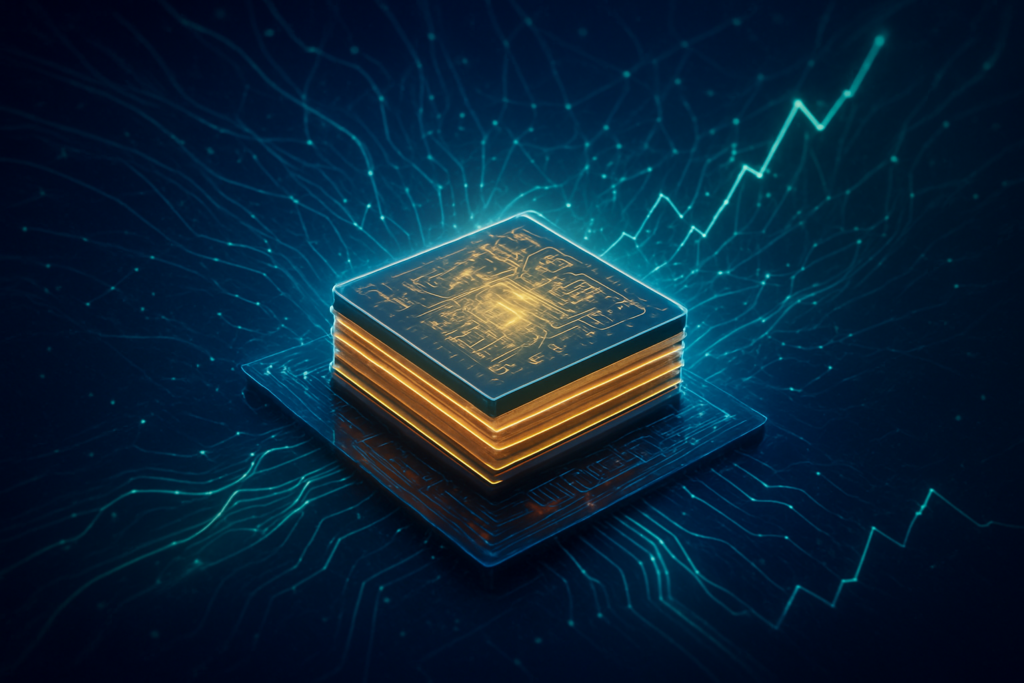
The global semiconductor memory market, a foundational pillar of modern technology, is currently experiencing an unprecedented surge in pricing, dramatically contrasting with earlier expectations of stabilization. Far from a calm period, the market is grappling with an "explosive demand" primarily from the artificial intelligence (AI) sector and burgeoning data centers. This voracious appetite for high-performance memory, especially high-bandwidth memory (HBM) and high-density NAND flash, is reshaping market dynamics, leading to significant cost increases that are rippling through industries and directly impacting consumers.
This dramatic shift, particularly evident in late 2025, signifies a departure from traditional market cycles. The immediate significance lies in the escalating bill of materials for virtually all electronic devices, from smartphones and laptops to advanced AI servers, forcing manufacturers to adjust pricing and potentially impacting innovation timelines. Consumers are already feeling the pinch, with retail memory prices soaring, while industries are strategizing to secure critical supplies amidst fierce competition.
The Technical Tsunami: AI's Demand Reshapes Memory Landscape
The current memory market dynamics are overwhelmingly driven by the insatiable requirements of AI, machine learning, and hyperscale data centers. This has led to specific and dramatic price increases across various memory types. Contract prices for both NAND flash and DRAM have surged by as much as 20% in recent months, marking one of the strongest quarters for memory pricing since 2020-2021. More strikingly, DRAM spot and contract prices have seen unprecedented jumps, with 16Gb DDR5 chips rising from approximately $6.84 in September 2025 to $27.20 in December 2025 – a nearly 300% increase in just three months. Year-over-year, DRAM prices surged by 171.8% as of Q3 2025, even outpacing gold price increases, while NAND flash prices have seen approximately 100% hikes.
This phenomenon is distinct from previous market cycles. Historically, memory pricing has been characterized by periods of oversupply and undersupply, often driven by inventory adjustments and general economic conditions. However, the current surge is fundamentally demand-driven, with AI workloads requiring specialized memory like HBM3 and high-density DDR5. These advanced memory solutions are critical for handling the massive datasets and complex computational demands of large language models (LLMs) and other AI applications. Memory can constitute up to half the total bill of materials for an AI server, making these price increases particularly impactful. Manufacturers are prioritizing the production of these higher-margin, AI-centric components, diverting wafer starts and capacity away from conventional memory modules used in consumer devices. Initial reactions from the AI research community and industry experts confirm this "voracious" demand, acknowledging it as a new, powerful force fundamentally altering the semiconductor memory market.
Corporate Crossroads: Winners, Losers, and Strategic Shifts
The current memory price surge creates a clear dichotomy of beneficiaries and those facing significant headwinds within the tech industry. Memory manufacturers like Samsung Electronics Co. Ltd. (KRX: 005930), SK Hynix Inc. (KRX: 000660), and Micron Technology, Inc. (NASDAQ: MU) stand to benefit substantially. With soaring contract prices and high demand, their profit margins on memory components are expected to improve significantly. These companies are investing heavily in expanding production capacity, with over $35 billion annually projected to increase capacity by nearly 20% by 2026, aiming to capitalize on the sustained demand.
Conversely, companies heavily reliant on memory components for their end products are facing escalating costs. Consumer electronics manufacturers, PC builders, smartphone makers, and smaller Original Equipment Manufacturers (OEMs) are absorbing higher bill of materials (BOM) expenses, which will likely be passed on to consumers. Forecasts suggest smartphone manufacturing costs could increase by 5-7% and laptop costs by 10-12% in 2026. AI data center operators and hyperscalers, while driving much of the demand, are also grappling with significantly higher infrastructure costs. Access to high-performance and affordable memory is increasingly becoming a strategic competitive advantage, influencing technology roadmaps and financial planning for companies across the board. Smaller OEMs and channel distributors are particularly vulnerable, experiencing fulfillment rates as low as 35-40% and facing the difficult choice of purchasing from volatile spot markets or idling production lines.
AI's Economic Footprint: Broader Implications and Concerns
The dramatic rise in semiconductor memory pricing underscores a critical and evolving aspect of the broader AI landscape: the economic footprint of advanced AI. As AI models grow in complexity and scale, their computational and memory demands are becoming a significant bottleneck and cost driver. This surge highlights that the physical infrastructure underpinning AI, particularly memory, is now a major factor in the pace and accessibility of AI development and deployment.
The impacts extend beyond direct hardware costs. Higher memory prices will inevitably lead to increased retail prices for a wide array of consumer electronics, potentially causing a contraction in consumer markets, especially in price-sensitive budget segments. This could exacerbate the digital divide, making cutting-edge technology less accessible to broader populations. Furthermore, the increased component costs can squeeze manufacturers' profit margins, potentially impacting their ability to invest in R&D for non-AI related innovations. While improved supply scenarios could foster innovation and market growth in the long term, the immediate challenge is managing cost pressures and securing supply. This current surge can be compared to previous periods of high demand in the tech industry, but it is uniquely defined by the unprecedented and specialized requirements of AI, making it a distinct milestone in the ongoing evolution of AI's societal and economic influence.
The Road Ahead: Navigating Continued Scarcity and Innovation
Looking ahead, experts largely predict that the current high memory prices and tight supply will persist. While some industry analysts suggest the market might begin to stabilize in 6-8 months, they caution that these "stabilized" prices will likely be significantly higher than previous levels. More pessimistic projections indicate that the current shortages and elevated prices for DRAM could persist through 2027-2028, and even longer for NAND flash. This suggests that the immediate future will be characterized by continued competition for memory resources.
Expected near-term developments include sustained investment by major memory manufacturers in new fabrication plants and advanced packaging technologies, particularly for HBM. However, the lengthy lead times for bringing new fabs online mean that significant relief in supply is not expected in the immediate future. Potential applications and use cases will continue to expand across AI, edge computing, and high-performance computing, but cost considerations will increasingly factor into design and deployment decisions. Challenges that need to be addressed include developing more efficient memory architectures, optimizing AI algorithms to reduce memory footprint, and diversifying supply chains to mitigate geopolitical risks. Experts predict that securing a stable and cost-effective memory supply will become a paramount strategic objective for any company deeply invested in AI.
A New Era of AI-Driven Market Dynamics
In summary, the semiconductor memory market is currently undergoing a transformative period, largely dictated by the "voracious" demand from the AI sector. The expectation of price stabilization has given way to a reality of significant price surges, impacting everything from consumer electronics to the most advanced AI data centers. Key takeaways include the unprecedented nature of AI-driven demand, the resulting price hikes for DRAM and NAND, and the strategic prioritization of high-margin HBM production by manufacturers.
This development marks a significant moment in AI history, highlighting how the physical infrastructure required for advanced AI is now a dominant economic force. It underscores that the growth of AI is not just about algorithms and software, but also about the fundamental hardware capabilities and their associated costs. What to watch for in the coming weeks and months includes further price adjustments, the progress of new fab constructions, and how companies adapt their product strategies and supply chain management to navigate this new era of AI-driven memory scarcity. The long-term impact will likely be a re-evaluation of memory's role as a strategic resource, with implications for innovation, accessibility, and the overall trajectory of technological progress.
This content is intended for informational purposes only and represents analysis of current AI developments.
TokenRing AI delivers enterprise-grade solutions for multi-agent AI workflow orchestration, AI-powered development tools, and seamless remote collaboration platforms.
For more information, visit https://www.tokenring.ai/.