Commercial properties need fencing for many reasons. Security is one of the biggest. But safety alone is not enough. Businesses also need easy access for employees, customers, deliveries, and emergency services. That’s why modern commercial fencing focuses on balancing protection and accessibility.
A well-designed fence does more than mark boundaries. It protects property, manages traffic flow, supports safety rules, and improves how a business looks from the street. When planned correctly, commercial fencing becomes a smart investment that supports both daily operations and long-term growth.
Why Commercial Properties Need Smart Fence Design
Commercial spaces face different challenges than residential ones. These properties often have:
- High foot traffic
- Regular vehicle movement
- Large delivery zones
- Multiple access points
- Expensive equipment and inventory
Because of this, fencing solutions must provide strong security without blocking everyday movement. Too much restriction can slow business operations. Too little protection can create safety risks.
That’s where thoughtful commercial fencing design makes the difference.
The Balance Between Safety and Accessibility
Safety and accessibility should never compete with each other. The best commercial fence systems support both at the same time.
Modern fence designs allow:
- Controlled entry for employees
- Open access for customers
- Secure zones for staff-only areas
- Safe emergency exits
This balance helps businesses remain safe without becoming difficult to navigate.
Many property managers now prefer commercial fence systems designed for controlled access, allowing businesses to protect sensitive areas while maintaining smooth daily operations.
Key Features That Support Both Security and Access
To achieve the right balance, commercial fencing often includes a mix of features.
1. Access-Controlled Gates
Gates allow businesses to control who enters and exits.
Common options include:
- Keycard systems
- Keypad entry
- Vehicle gate openers
- Intercom systems
These tools allow staff to move freely while keeping unauthorized visitors out.
2. Strategic Entry Points
Instead of blocking all access, fencing plans should guide movement naturally.
Good layout includes:
- Clearly marked entrances
- Separate staff and visitor entry points
- Dedicated service and delivery gates
- Emergency exit access
This keeps traffic organized while improving safety.
3. Durable, Low-Maintenance Materials
Commercial fences face daily wear and weather exposure. Choosing the right materials helps ensure long-term performance.
Popular options include:
- Aluminum fencing
- Steel fencing
- Vinyl fencing
- Coated chain-link fencing
These materials provide strength while requiring minimal upkeep, making them ideal for busy commercial settings.
Different Commercial Fence Applications
Every commercial property is different. The fencing solution should match the specific needs of the business.
Office Buildings
Office spaces need fencing that:
- Enhances appearance
- Protects parking areas
- Manages pedestrian traffic
- Maintains a welcoming environment
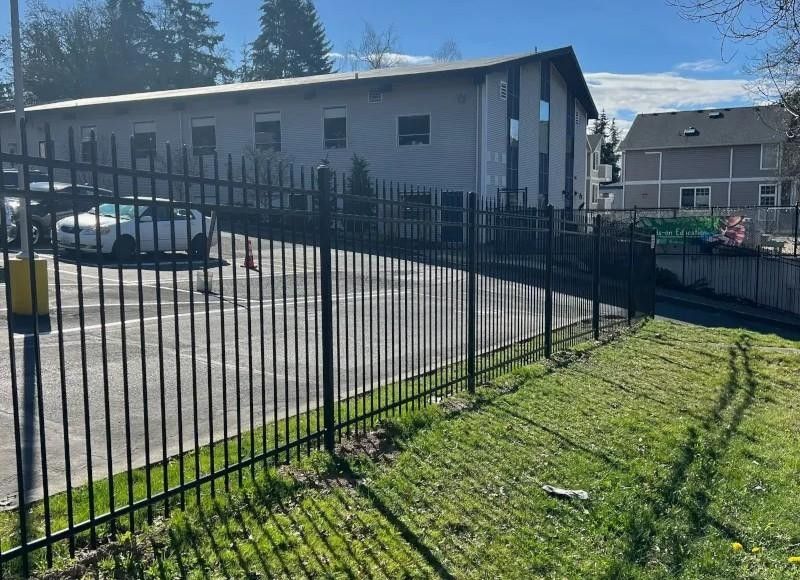
Decorative metal fences with controlled gates are popular choices.
Retail Centers
Retail properties require fencing that:
- Guides foot traffic
- Protects loading areas
- Secures back-of-house zones
- Remains customer-friendly
Well-designed fencing improves both security and customer experience.
Industrial and Warehouse Sites
These properties require stronger security while still allowing smooth logistics.
Fence design focuses on:
- Heavy-duty materials
- Wide vehicle gates
- Controlled employee access
- Clear safety zones
Here, durability and safety management are top priorities.
Schools and Medical Facilities
These facilities require both safety and openness.
Fence solutions support:
- Student and patient safety
- Emergency access
- Visitor flow control
- Visual openness
Soft design elements combined with smart access control help achieve this balance.
How Fence Design Impacts Daily Operations
A poorly planned fence can cause:
- Traffic congestion
- Employee delays
- Customer confusion
- Delivery inefficiencies
On the other hand, thoughtful fencing design helps:
- Improve workflow
- Enhance visitor experience
- Reduce safety risks
- Increase operational efficiency
This makes professional planning essential for long-term success.
Why Proper Installation Matters
Even the best fencing materials can fail if installed incorrectly. Proper installation ensures:
- Structural stability
- Long-term durability
- Correct gate operation
- Proper alignment
Working with a professional team that specializes in fence installation services for business properties helps avoid costly mistakes and ensures smooth functionality.
Accessibility Compliance and Safety Standards
Commercial fencing must meet safety regulations and accessibility guidelines.
Important considerations include:
- ADA-compliant gate widths
- Emergency egress access
- Fire department clearance zones
- Local zoning rules
Professional fence planning ensures compliance with local building codes and safety standards, reducing liability risks.
Weather-Resistant Fencing for Utah Conditions
Utah’s climate includes:
- Heavy snowfall
- Freezing temperatures
- High summer heat
- Strong winds
Commercial fencing must withstand these extremes. That’s why weather-resistant materials and proper installation techniques are essential.
Durable coatings, reinforced posts, and strong foundations help fences stay secure and attractive throughout seasonal changes.
Enhancing Security Without Creating Barriers
Modern commercial fencing avoids the old fortress look. Instead, designs focus on blending security into the environment.
Popular strategies include:
- Decorative metal fencing
- Landscaping integration
- Low-profile barriers
- Layered security zones
This keeps businesses safe without making properties feel closed or intimidating.
Long-Term Cost Benefits of Smart Fence Design
While high-quality commercial fencing may require a higher initial investment, it saves money long term by:
- Reducing repairs
- Lowering security incidents
- Decreasing liability
- Improving property value
Well-planned fencing delivers both financial and functional returns.
Future-Proofing Commercial Properties
Businesses grow, change, and expand. Modern fence solutions allow flexibility for future needs.
This includes:
- Expandable gate systems
- Modular fencing layouts
- Adjustable access control systems
Planning ahead helps businesses avoid expensive redesigns later.
Final Thoughts
Commercial fencing is no longer just about keeping people out. Today, it plays a major role in managing safety, accessibility, and daily business flow. The right fencing solution protects valuable assets while supporting smooth operations.
By focusing on design, materials, and professional installation, businesses can create secure environments that remain welcoming and easy to navigate. Thoughtful planning ensures that safety and accessibility work together, not against each other.
When commercial fencing is done right, it becomes a powerful asset that supports security, productivity, and long-term business success.