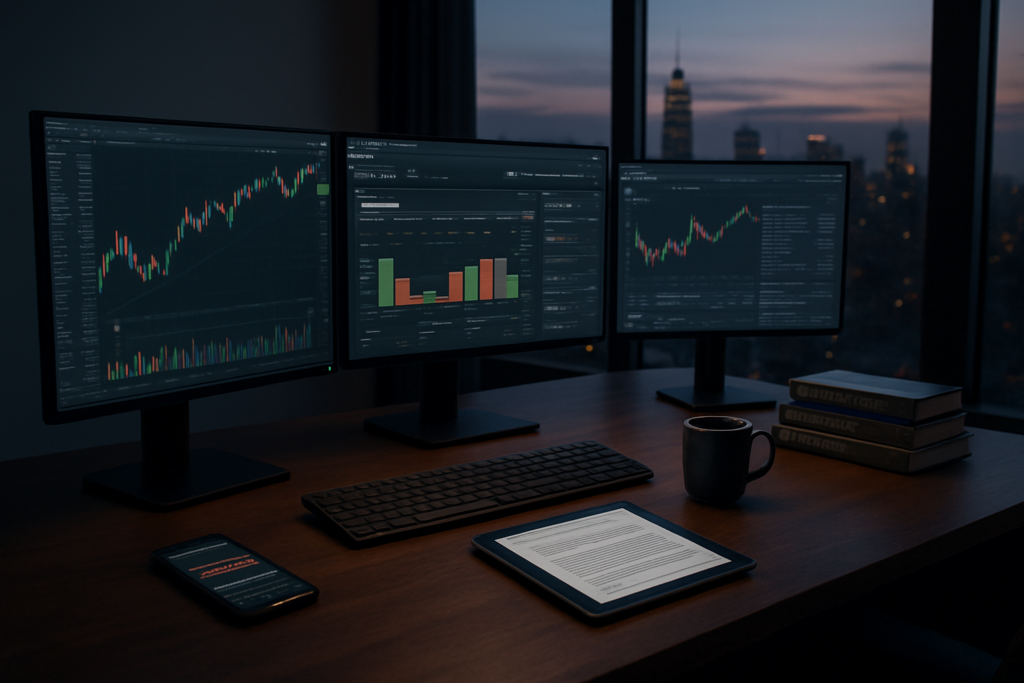
As the sun sets over Atlanta, Georgia, 25-year-old Logan Sudeith isn't heading home from an office. Instead, he is likely propped up against his headboard, surrounded by glowing monitors and discarded DoorDash containers, preparing for another marathon shift in the world of "Information Finance." Sudeith is a leading figure in a burgeoning class of professionals who have abandoned traditional finance to trade the news in real-time. On platforms like Kalshi and Polymarket, the odds of a geopolitical crisis or a presidential "mention" of a specific keyword are no longer just points of conversation—they are a paycheck.
Currently, the market for professional event trading is exploding. Monthly volumes across the sector hit a staggering $13.5 billion in December 2025, driven by a post-election hangover that transitioned seamlessly into high-stakes macro-economic and culture-war contracts. Sudeith recently hit a milestone that would make any Wall Street analyst blush: $100,000 in profit in a single month. This trend is drawing thousands of "news-driven" traders away from the 9-to-5 grind, betting that their ability to parse a tweet or analyze a legislative sub-clause is more valuable than any corporate salary.
The Market: What's Being Predicted
The landscape of prediction markets has shifted dramatically from niche political betting to a comprehensive financial ecosystem. At the center of this movement are two dominant forces: Kalshi, the federally regulated exchange in the United States, and Polymarket, which recently successfully re-entered the U.S. market after acquiring the CFTC-licensed derivatives exchange QCEX. These platforms offer "event contracts"—binary options that pay out $1 if an event occurs and $0 if it does not.
Trading on these platforms is no longer a hobby. As of January 22, 2026, the market has seen a massive surge in liquidity for "mention markets"—contracts that pay out based on whether specific figures like Donald Trump use phrases such as "drill, baby, drill" during public addresses. Sudeith has dominated this space, utilizing API integrations to execute trades in milliseconds as soon as a transcript is processed.
The volume is not limited to politics. The industry processed over $814 million in a single day on January 18, 2026, following the "Maduro Incident" in Venezuela. While the 2024 U.S. Election provided the initial proof of concept, the market has matured into 24/7 coverage of everything from the NYC mayoral race to scientific breakthroughs and even the Time Person of the Year selection.
Why Traders Are Betting
For traders like Sudeith, the move from a $75,000-a-year job as a financial risk analyst to a full-time "Professional Event Trader" (PMT) was a matter of simple arithmetic. "The math was clear," Sudeith famously noted, citing his ability to earn a year's salary in a single successful month on Kalshi, where his cumulative profits have surpassed $302,000.
The strategy behind these bets is rooted in "Information Finance"—a term popularized by Ethereum founder Vitalik Buterin. Unlike traditional stock trading, which relies on earnings reports and P/E ratios, event trading relies on the aggregation of truth. Sudeith and his peers spend upwards of 100 hours a week conducting deep historical analysis and monitoring live sentiment. For his $40,236 win on the Time Person of the Year contract, Sudeith didn't just guess; he meticulously tracked selection patterns and media leaks that the broader market had ignored.
However, the strategy is not without high-stakes drama. Sudeith recently faced his "biggest loss ever" during the Venezuelan political crisis, where he took a heavy hit betting on the removal of Nicolas Maduro. The volatility of these markets means that a trader can be up six figures one week and fighting for liquidity the next. This has led to the rise of elite communities like the "Crypto Inner Circle" on Discord, where traders share order flow analysis to spot "insidered" activity—bets that suggest someone, somewhere, has non-public information.
Broader Context and Implications
The rise of the PMT class has coincided with a massive influx of institutional capital. In late 2025, the Intercontinental Exchange (NYSE: ICE), the parent company of the New York Stock Exchange, invested nearly $2 billion into Polymarket’s infrastructure. Simultaneously, traditional betting giants like DraftKings (Nasdaq: DKNG) and Flutter Entertainment (NYSE: FLUT), via its subsidiary FanDuel, launched dedicated event contract platforms to compete for market share.
This institutionalization has rebranded "betting" as "InfoFi." Major newsrooms now treat prediction market tickers as more accurate than traditional polling. Yet, this legitimacy comes with new risks. The regulatory environment remains a patchwork; while Kalshi is federally overseen by the CFTC, it faces ongoing legal battles in states like Nevada and Massachusetts over the legality of sports-related contracts.
Furthermore, the "lifestyle" of the full-time trader is under scrutiny. The 24/7 nature of global news cycles has led to reports of extreme burnout and social isolation. Sudeith’s own "bed-lounging" setup and reliance on delivery apps highlight the physical and mental toll of a career that requires constant vigilance. There is also a looming "tax no-man's land"—many traders are filing under Section 1256 for a 60/40 tax split, but if the IRS reclassifies these earnings as gambling winnings, many could face catastrophic back-tax liabilities.
What to Watch Next
The next several weeks will be a crucible for the prediction market industry. In February 2026, a New York court is expected to issue a ruling on the "de facto" legality of political contracts, a decision that could either cement the industry’s future or create a major hurdle for U.S.-based exchanges.
Traders are also closely watching the "ORACLE Act" currently moving through the New York legislature, which seeks to formally define prediction markets as financial entities rather than gambling venues. If passed, it would likely trigger a fresh wave of TradFi professionals quitting their roles to join the PMT ranks.
On the market side, liquidity is the key metric to monitor. While headline volumes are high, "slippage"—the difference between the expected price of a trade and the price at which it's executed—remains a significant risk during non-peak hours. As more institutional "market makers" enter the space, this should stabilize, but for now, it remains a dangerous game for those trading with large positions.
Bottom Line
The story of Logan Sudeith is the story of a fundamental shift in how we value information. Prediction markets have moved from the periphery of the internet to the heart of the financial world, turning news consumption into a professional skill set. These markets are no longer just about who wins an election; they are "truth engines" that provide a real-time, financialized look at the world’s most pressing questions.
However, the transition from TradFi to PMT is not for the faint of heart. It requires a tolerance for extreme volatility, a 100-hour work week, and a willingness to navigate a legal and tax landscape that is still being written. For those like Sudeith, the rewards—both financial and intellectual—are worth the risk. For the rest of the world, these markets offer a new way to see the future, one trade at a time.
This article is for informational purposes only and does not constitute financial or betting advice. Prediction market participation may be subject to legal restrictions in your jurisdiction.
PredictStreet focuses on covering the latest developments in prediction markets.
Visit the PredictStreet website at https://www.predictstreet.ai/.