As of mid-January 2026, a seismic shift has occurred in the landscape of global finance. Prediction markets, once relegated to the fringes of political punditry and sports betting, have officially matured into what many are calling "Information Finance." Nowhere is this more evident than in the "Geopolitical Surge"—a phenomenon that has seen geopolitical risk markets become the fastest-growing segment on Polymarket, currently boasting a 29.7% activity rate. This spike represents a massive migration of capital away from traditional asset classes and toward event-based contracts that track the world’s most volatile flashpoints.
The surge reached a fever pitch on January 12, 2026, when total daily trading volume across the industry hit a record $701.7 million. Traders are no longer just betting on who will win an election; they are pricing the probability of "Operation Iron Strike" in the Middle East and the stability of the Iranian regime. With markets moving up to 15 minutes ahead of traditional news wires like Bloomberg or Reuters, prediction platforms have become the ultimate "truth engine" for institutional desks looking to navigate a world increasingly defined by kinetic conflict.
The Market: What's Being Predicted
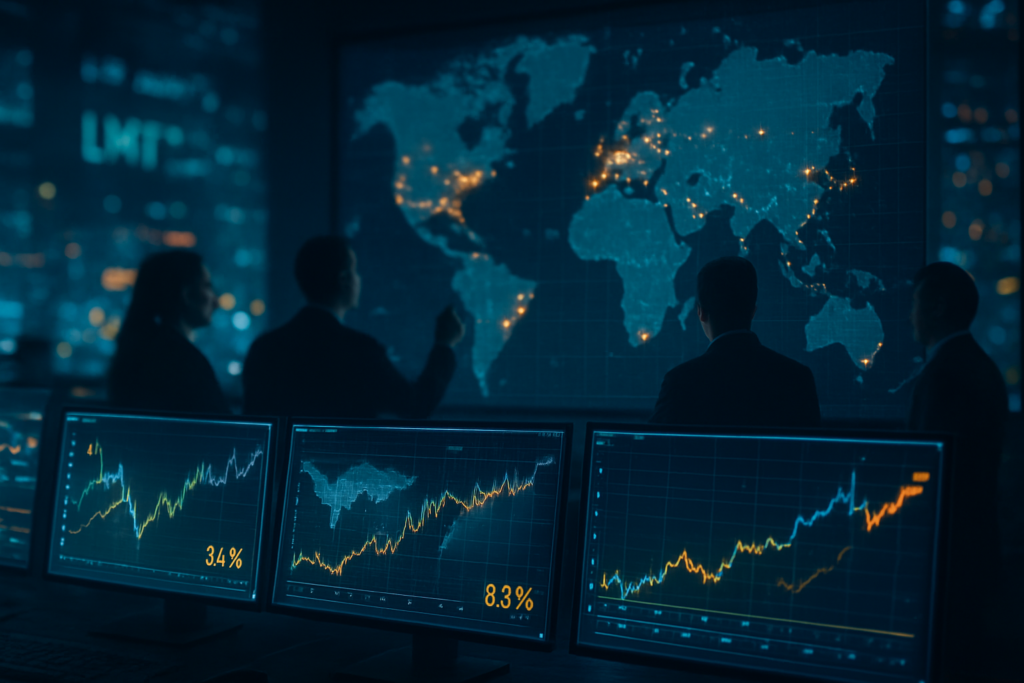
The core of the current geopolitical surge is centered on high-stakes military outcomes in the Middle East. On Polymarket, the most heavily traded contract is "Israel to strike Iran by January 31, 2026," which has seen over $8 million in volume this month alone. As of January 15, the odds are fluctuating wildly between 34% and 52%, following intelligence reports of Israeli security cabinet meetings regarding retaliatory measures. Meanwhile, a broader contract on whether the U.S. will strike Iran by mid-year has seen its probability surge to 83%, with over $22 million in liquidity.
While Polymarket leads in geopolitical variety, Kalshi has dominated the volume charts, capturing 66.4% of the market share on peak days. Much of this growth is attributed to its integration with Robinhood (NASDAQ: HOOD), which has opened the door for over 100 million retail users to trade economic and political event contracts. This massive influx of liquidity has stabilized bid-ask spreads, making it possible for larger institutional players to enter and exit positions without massive slippage, even in high-tension "global conflict" categories.
The resolution criteria for these markets have become increasingly sophisticated. Rather than simple "Yes/No" outcomes, many markets now use multi-layered triggers. For instance, the "Ali Khamenei out as Supreme Leader" contract is tied to official state announcements or verified reports from three international news agencies. By mid-January 2026, the probability of a leadership change in Tehran by year-end has reached a startling 66%, driven by the ongoing "Bazaar Revolts" and the hyper-devaluation of the Iranian Rial.
Why Traders Are Betting
The 29.7% activity rate isn't just driven by speculators; it is being propelled by institutional "macro-political hedging." Sophisticated firms, such as Oldenburg Capital Partners, have pioneered strategies that treat prediction markets as insurance policies against physical world disruptions. For example, a fund with heavy exposure to defense contractors like Lockheed Martin (NYSE: LMT) or Northrop Grumman (NYSE: NOC) might buy "Yes" contracts on a Middle East escalation. If a conflict breaks out, the "Yes" contract pays out, offsetting the potential broader market volatility or supply chain disruptions that could hurt their equity portfolio.
Specific defense stocks are now acting as proxies for these prediction markets. Traders have noted a nearly perfect correlation between the price of RTX Corporation (NYSE: RTX)—the manufacturer of the Iron Dome interceptors—and the "Israel Strike" contract. When the prediction market probability of a strike increases, RTX stock often follows as investors price in the inevitable demand for defensive systems. This "Hedged Escalation" strategy has become a standard playbook for navigating the early 2026 conflict cycle.
Beyond institutional hedging, the markets are absorbing "insider signal leakage." The early January capture of Venezuelan President Nicolás Maduro by U.S.-backed forces served as a landmark proof-of-concept. Hours before the official Pentagon announcement, the probability of Maduro's downfall on Polymarket spiked from 12% to 85%. One anonymous trader reportedly turned $32,000 into $400,000 by acting on the "signal" before it hit the mainstream news. This speed advantage—often 10 to 15 minutes ahead of traditional media—is a primary driver for high-frequency traders.
Broader Context and Implications
The "Geopolitical Surge" signifies a fundamental change in how the public and the financial sector consume information. We are moving away from an era of "expert analysis" and into an era of "incentivized accuracy." In a world of deepfakes and propaganda, the prediction market offers a cold, hard number backed by real capital. If the probability of a conflict is 80%, it doesn't matter what a talking head on television says; the collective intelligence of the market has reached a consensus that carries financial weight.
Historically, these markets have shown remarkable accuracy compared to traditional polling or diplomatic forecasting. During the 2024 cycles, prediction markets were often the first to correctly price in legislative stalemates. Now, in 2026, they are being used to navigate even more complex hurdles, such as the passage of the CLARITY Act for digital asset regulation. The regulatory environment has also shifted; as the CFTC and other bodies grapple with the rise of event contracts, the massive retail adoption through platforms like Robinhood has made these markets "too big to ignore."
Furthermore, these markets reveal a deep public cynicism—or perhaps realism—about global stability. The high activity rate in "World War III" or "Regime Collapse" markets suggests that the public is using these platforms to process and price their anxieties. By turning a global crisis into a tradable asset, prediction markets provide a way for individuals to gain a sense of agency, or at least financial protection, in an increasingly unpredictable world.
What to Watch Next
The immediate focus for the market is the January 31 deadline for the Israel-Iran strike contract. Any movement in the diplomatic sphere or localized skirmishes in the Levant will cause massive swings in these odds. Traders should also keep a close eye on the "Bazaar Revolts" in Iran; if the internal unrest leads to a significant crack in the military's loyalty to the Supreme Leader, the "Regime Stability" markets will likely be the first to signal a historic shift in Persian politics.
Looking further ahead, the June 30, 2026, U.S.-Iran strike contract remains a high-liquidity "whale" market. This contract is expected to become the centerpiece of geopolitical trading for the first half of the year. Additionally, watch for the emergence of "Cyber-Conflict" markets, which are predicted to be the next sub-sector to experience a surge as state-sponsored hacking incidents become more frequent and impactful on global trade.
Finally, the intersection of these markets with the 2026 U.S. Midterm Elections will be critical. If the geopolitical situation continues to deteriorate, expect to see "Cross-Market" hedging where traders bet on congressional control as a way to predict future defense spending authorizations. The feedback loop between the battlefield, the ballot box, and the betting slip has never been tighter.
Bottom Line
The 29.7% activity rate in geopolitical markets is not a fluke; it is the new baseline for 2026. As traditional news sources struggle to keep pace with the speed of global events, Polymarket and Kalshi have stepped in to provide a real-time, financially incentivized map of the world's risks. For the modern investor, "Information Finance" is no longer optional—it is the primary tool for survival in a volatile macro environment.
Whether it is hedging a position in Northrop Grumman (NYSE: NOC) or simply looking for the most accurate news on Iranian stability, the message from the markets is clear: the most valuable commodity in 2026 is a "Yes" or "No" contract that settles on the truth. As we move deeper into this year of global transition, the "Geopolitical Surge" will likely continue to define the frontier of the global economy.
This article is for informational purposes only and does not constitute financial or betting advice. Prediction market participation may be subject to legal restrictions in your jurisdiction.
PredictStreet focuses on covering the latest developments in prediction markets.
Visit the PredictStreet website at https://www.predictstreet.ai/.