SoftBank Group (OTC: SFTBY) saw its shares climb by more than 4% in mid-February 2026, signaling a powerful return of investor confidence as the Japanese conglomerate pivotally shifts its focus toward aggressive artificial intelligence (AI) investments. The rally followed a blockbuster quarterly earnings report where the company declared a net profit of 248.6 billion yen ($1.62 billion) for the final quarter of 2025—a dramatic reversal from the heavy losses that plagued the firm during the post-pandemic tech downturn.
The surge is largely attributed to Masayoshi Son’s declaration of "total offense mode," a strategic repositioning that has seen the company evolve from a diverse venture capital outfit into what Son calls an "AI-era industrial holding company." By doubling down on its most successful assets and liquidating others to fund massive infrastructure projects, SoftBank is betting its future on the pursuit of Artificial Super Intelligence (ASI), a vision that Son believes will reshape the global economy within the next decade.
The Return to Profitability and the 'Total Offense' Pivot
The primary catalyst for the recent 4% share gain was SoftBank's announcement on February 12, 2026, that it had returned to profitability. This turnaround was underpinned by a staggering $4.2 billion valuation gain from its early and aggressive stake in OpenAI. For the first nine months of the fiscal year ending in December 2025, SoftBank recorded a profit of 3.17 trillion yen ($20.7 billion), nearly five times its performance from the previous year. This financial stability has provided Masayoshi Son with the "war chest" needed to move away from the cautious "defense" mode of 2023 and 2024.
The timeline leading to this moment is defined by a series of high-stakes maneuvers. In late 2025, SoftBank made the controversial decision to exit its entire $5.8 billion stake in Nvidia (NASDAQ: NVDA) to free up capital for a $30 billion follow-on investment in OpenAI. While some analysts initially questioned the move given Nvidia's dominance, the market's reaction in February 2026 suggests a growing belief in Son’s broader vertical integration strategy. This strategy is centered around "Project Izanagi," a $100 billion venture named after the Japanese god of creation, aimed at building a vertically integrated AI semiconductor champion that could eventually challenge the current market leaders.
Key stakeholders, including major institutional investors in Japan and the U.S., have responded positively to the clarity of Son’s new vision. Unlike the fragmented approach of the Vision Funds, the current strategy focuses on the physical constraints of AI: chips, infrastructure, and energy. Initial market reactions indicate that investors are now valuing SoftBank not just as a portfolio of startups, but as a critical infrastructure player in the global AI race.
Winners and Losers in the New AI Architecture
The most significant winner in SoftBank’s recent trajectory is undoubtedly Arm Holdings (NASDAQ: ARM). As SoftBank retains a roughly 90% stake in the chip designer, Arm’s valuation serves as the fundamental anchor for SoftBank’s Net Asset Value (NAV). In early 2026, Arm was successfully repositioned from a simple architecture licensor to a direct provider of high-performance AI chips for data centers. By housing Arm alongside newly acquired entities like Graphcore and Ampere Computing, SoftBank has created a unified "AI Computing Segment" that directly benefits from the massive capital expenditures currently flowing into the sector.
On the other side of the ledger, legacy technology companies that failed to pivot to AI-centric hardware or software are finding themselves sidelined by SoftBank’s aggressive capital allocation. While Nvidia (NASDAQ: NVDA) remains the gold standard of the industry, SoftBank’s exit from its stock indicates a shift from being a passive investor to an active competitor. Furthermore, SoftBank’s massive $500 billion infrastructure partnership, "Project Stargate," in collaboration with Oracle (NYSE: ORCL) and Abu Dhabi’s MGX, positions the group as a formidable rival to traditional cloud service providers who lack the same level of vertical hardware integration.
Smaller venture-backed AI startups may also feel the squeeze. As SoftBank concentrates its multi-billion dollar "science fiction-scale" bets on a few key winners like OpenAI, the broader ecosystem of the Vision Fund may see less support. The focus has clearly shifted toward "industrial-scale" AI—projects that require hundreds of billions of dollars in power grids and data centers—potentially leaving software-only startups with fewer exit opportunities or funding rounds from the world's most famous tech investor.
Scaling to Super Intelligence: Broader Industry Trends
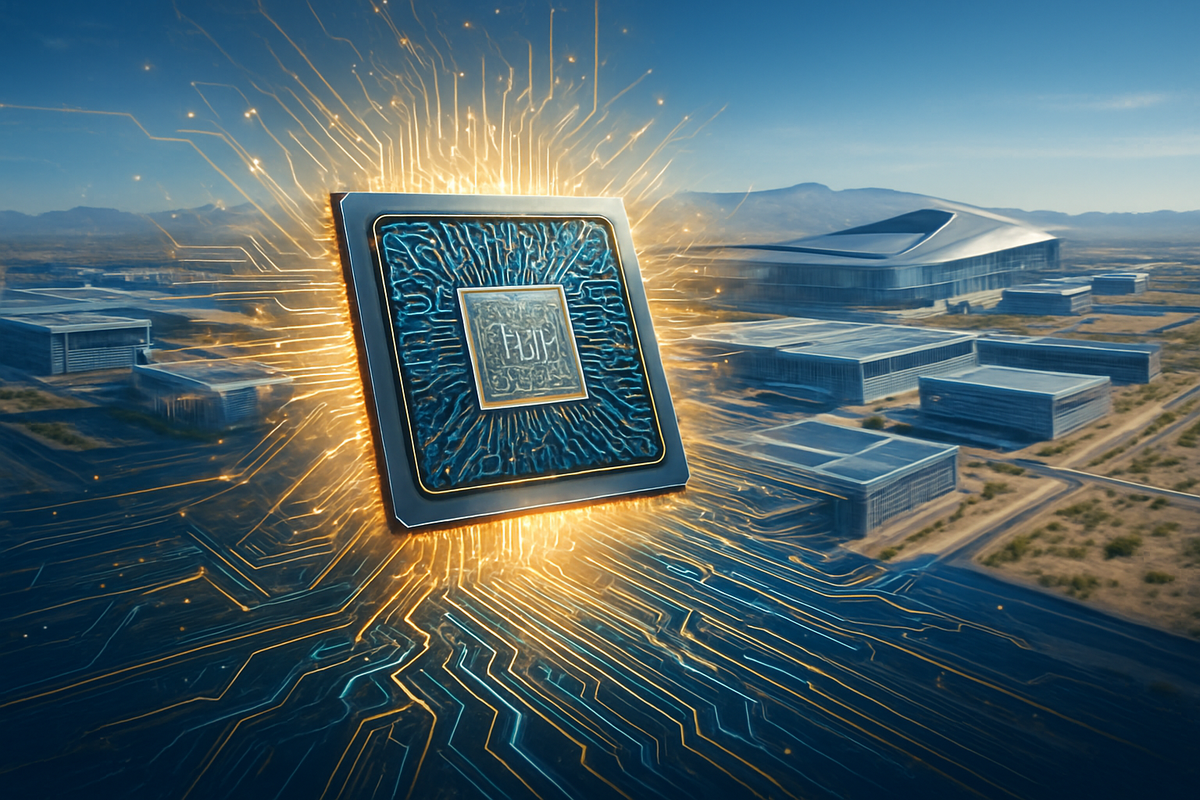
SoftBank’s shift mirrors a broader trend in the technology sector toward "sovereign AI" and massive-scale infrastructure. The group's involvement in "Project Crystal Land"—a proposed $1 trillion AI and robotics complex in Arizona—highlights a move toward domestic manufacturing and supply chain security. This project, which involves potential participation from TSMC (NYSE: TSM), reflects the growing fusion between private tech investment and national industrial policy. It suggests that the next era of tech dominance will be won by those who control the power and the physical space where AI resides, not just the code.
Historically, Masayoshi Son’s bets have been characterized by extreme volatility—ranging from the massive success of Alibaba to the high-profile failure of WeWork. However, the current strategy is built on more tangible assets. By leveraging Arm’s power-efficient designs, SoftBank is addressing the single greatest bottleneck in AI: energy consumption. This fits into a global policy trend where governments are increasingly concerned with the environmental and logistical impact of massive data centers. SoftBank’s partnership with Intel (NASDAQ: INTC) to develop specialized "Z-Angle Memory" for AI hardware further emphasizes this shift toward hardware-level efficiency.
The ripple effects of SoftBank’s "total offense" are already being felt across the semiconductor industry. Competitors are being forced to accelerate their own vertical integration plans as SoftBank prepares to ship its first Izanagi AI processors in late 2026. This move marks a fundamental change in the semiconductor landscape, as a primary architect (Arm) transitions into a producer, potentially upending the traditional licensor-client relationship that has defined the mobile and PC eras.
What Comes Next for the AI Industrial Giant?
In the short term, the market will be laser-focused on the execution of Project Izanagi. Reports indicate that prototype samples have been undergoing testing since the summer of 2025, and any delays in the late 2026 shipping schedule could dampen the current share momentum. Furthermore, the massive scale of Project Stargate—aiming for 10 gigawatts of data center capacity by 2029—will require navigating complex regulatory environments and securing unprecedented amounts of green energy, presenting significant operational challenges.
Long-term, SoftBank is positioning itself to be the primary provider of the hardware and energy required for Artificial Super Intelligence. If Son’s prediction of ASI being 10,000 times smarter than humans comes to fruition, SoftBank’s ownership of the underlying chip architecture and the data centers that house these models could make it one of the most powerful corporate entities in history. However, this path is fraught with geopolitical risks, particularly regarding its operations in the U.S. and its historical ties to Chinese manufacturing hubs.
Strategic adaptations may be required if the AI bubble shows signs of cooling. While SoftBank is currently flush with cash from its Arm and OpenAI valuations, any significant correction in the AI sector would test the company's high-leverage strategy once again. Investors should watch for further announcements regarding the "Trump Industrial Parks" or similar free-trade zone initiatives in the U.S., as these will be key indicators of how well SoftBank is navigating the intersection of technology and global politics.
A New Era for Investors
The mid-February 2026 surge in SoftBank’s shares represents more than just a positive earnings report; it marks the definitive end of the "Vision Fund era" and the beginning of the "Izanagi era." SoftBank has successfully transitioned from a venture capital firm into a vertically integrated AI powerhouse, leveraging its 90% stake in Arm Holdings to fund a $100 billion semiconductor venture and trillion-dollar infrastructure projects.
Moving forward, the market will likely view SoftBank as a high-beta play on the future of AI infrastructure. The company’s return to profitability provides a cushion, but the sheer scale of its "all-in" bets means that the stakes have never been higher. Investors should keep a close eye on the development milestones of the Izanagi chip and the progress of its Arizona robotics complex.
In summary, Masayoshi Son has once again reinvented himself and his company. By focusing on the physical foundations of AI—chips, power, and land—SoftBank is attempting to build an unassailable moat around the future of computing. Whether this leads to the creation of Artificial Super Intelligence or becomes another chapter in the story of Son’s legendary risk-taking, the impact on the global financial and technology markets will be profound and lasting.
This content is intended for informational purposes only and is not financial advice