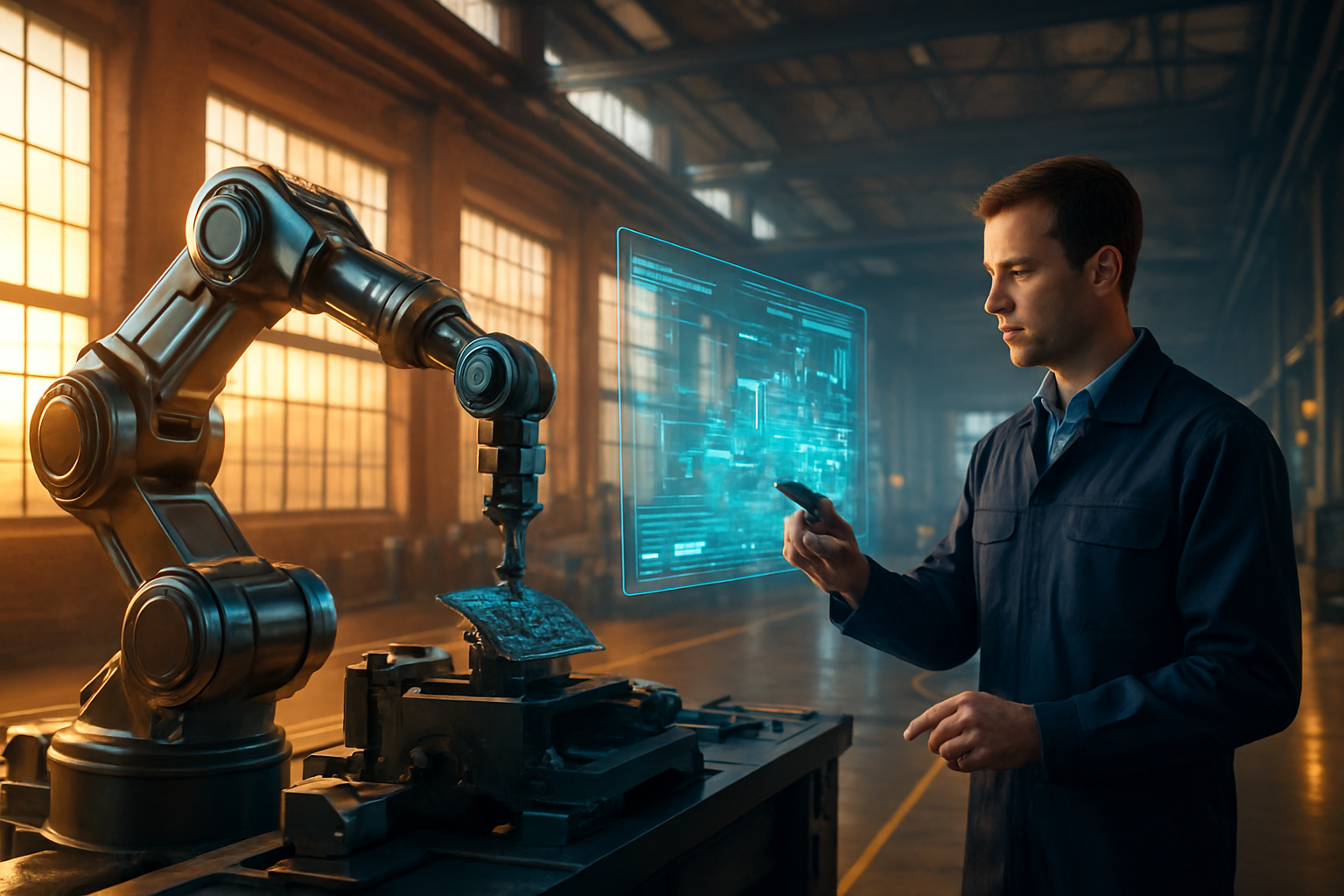
The American industrial engine has officially shifted back into high gear. According to the latest data released in February 2026, the Institute for Supply Management (ISM) Manufacturing Index surged to 52.6, marking the first time the sector has entered expansion territory in nearly a year. This pivotal reading signals a definitive end to the "capital deep freeze" of 2025 and underscores a broader structural shift in the U.S. economy: the long-awaited re-industrialization of the American heartland.
The implications of this breakout are immediate and far-reaching. As domestic production facilities move from groundbreaking to operational, the convergence of favorable fiscal policy and cutting-edge "Physical AI" is creating a competitive moat for U.S.-based firms. Market analysts are already re-rating the industrial sector, moving away from the cautious "wait-and-see" approach that defined the previous four quarters toward an aggressive growth outlook for the remainder of 2026.
The Path to 52.6: Policy Meets Production
The journey to the February 52.6 reading was anything but guaranteed. Throughout 2025, the manufacturing sector languished in a contractionary cycle, weighed down by high interest rates and global trade volatility. However, the tide began to turn with the passage of the "One Big Beautiful Bill Act" (OBBBA) in July 2025, which fundamentally reshaped the tax landscape for domestic producers. Key provisions, including the permanent reinstatement of 100% bonus depreciation and the immediate expensing of R&D costs, provided the necessary liquidity for firms to pull the trigger on delayed capital expenditures.
By the start of 2026, the massive investments sparked by earlier legislation, such as the CHIPS Act and the Inflation Reduction Act, finally hit their stride. Construction spending for manufacturing facilities more than doubled compared to 2021 levels, with the "American Heartland"—specifically states like Ohio, Indiana, and Tennessee—becoming the epicenter of this activity. In January and February, executives reported a massive jump in New Orders (57.1) and Production (55.9), driven by a massive re-stocking cycle and a strategic push to reshore supply chains ahead of anticipated 2027 trade adjustments.
Winners and Losers in the Autonomous Era
As the industrial sector accelerates, the hierarchy of winners is being rewritten by those who can most effectively integrate intelligence into their hardware. Nvidia (NASDAQ: NVDA) has emerged as the clear architect of this transition. Its Isaac robotics platform is now considered the "operating system" for modern smart factories, allowing machines to reason and adapt on the shop floor without constant human intervention. Similarly, Rockwell Automation (NYSE: ROK) has seen its valuation climb as it deploys generative AI "Copilots" that allow factory managers to rewrite production code in minutes rather than weeks, a critical advantage in an era of rapid product cycles.
In the heavy equipment space, Caterpillar (NYSE: CAT) and John Deere (NYSE: DE) are reaping the rewards of their "Smart Industrial" strategies. Caterpillar is benefiting from the dual tailwinds of the manufacturing boom and the relentless build-out of AI data centers, which require the company's high-capacity power systems and construction machinery. Meanwhile, Deere has successfully connected over 1.5 million machines to its autonomous operations center, effectively turning every piece of hardware into a data-gathering node. Conversely, firms that failed to modernize their legacy plants or relied too heavily on off-shore logistics are finding themselves at a significant cost disadvantage, struggling to compete with the speed and tax-efficiency of the new domestic hubs.
A Structural Shift: Beyond the Index
The 2026 manufacturing renaissance represents a fundamental departure from the labor-intensive industrialism of the 20th century. This is "Industry 5.0"—a paradigm where human-machine collaboration is powered by digital twins and autonomous mobile robots. By using platforms like Nvidia Omniverse, companies now simulate an entire production year in a digital environment before a single machine is turned on, reducing physical downtime by as much as 30%. This efficiency is the primary reason the U.S. is successfully reshoring operations despite a persistent domestic labor shortage of roughly 500,000 skilled workers.
This trend is not just a technological flex; it is a geopolitical imperative. The "re-industrialization" of the heartland is a direct response to a decade of supply chain fragility. The OBBBA's "Qualified Production Property" deduction, which allows for a 100% write-off on new factory construction, has made the U.S. one of the most cost-effective places in the world to build high-tech components. Historically, this level of domestic investment has only been seen during wartime or the early space race, suggesting that the current expansion is part of a long-term strategic pivot rather than a standard business cycle fluctuation.
The Road Ahead: Scaling the Smart Factory
In the short term, investors should expect continued volatility as companies navigate the "integration phase" of their new AI systems. While the ISM reading is positive, the challenge now shifts to scaling these "lights-out" operations—factories that can run autonomously overnight with minimal supervision. Strategic pivots will be required for traditional logistics partners, who must now adapt to "Self-Healing Supply Chains" where AI identifies and corrects bottlenecks in real-time.
Over the next 12 to 24 months, the primary headwind will be the "war for talent" as manufacturers compete for technicians capable of maintaining AI-driven systems. We may see a wave of consolidation as larger players like GE Aerospace (NYSE: GE) and the newly independent GE Vernova (NYSE: GEV) acquire smaller, specialized robotics firms to bolster their internal automation capabilities. The market opportunity in "Industrial AI" remains in its early innings, with massive potential for margin expansion as these technologies mature.
Conclusion: A New Foundation for the Heartland
The return of the ISM Manufacturing Index to 52.6 is more than a statistical anomaly; it is the first concrete evidence that the U.S. manufacturing renaissance has moved from policy rhetoric to physical reality. The combination of aggressive tax incentives, federal industrial strategy, and the rapid deployment of Physical AI has created a powerful flywheel for growth. For the first time in decades, the "American Heartland" is not just a nostalgia-laden phrase but a high-tech engine of economic output.
Moving forward, the market will likely reward companies that demonstrate a "Physical AI-First" mentality. Investors should closely watch for sustained growth in the ISM's New Orders and Production sub-indices, as well as any further updates to domestic R&D tax credits. As the factory floors of 2026 become increasingly autonomous, the gap between the technological "haves" and "have-nots" will only widen, defining the winners of the next decade of American industry.
This content is intended for informational purposes only and is not financial advice.