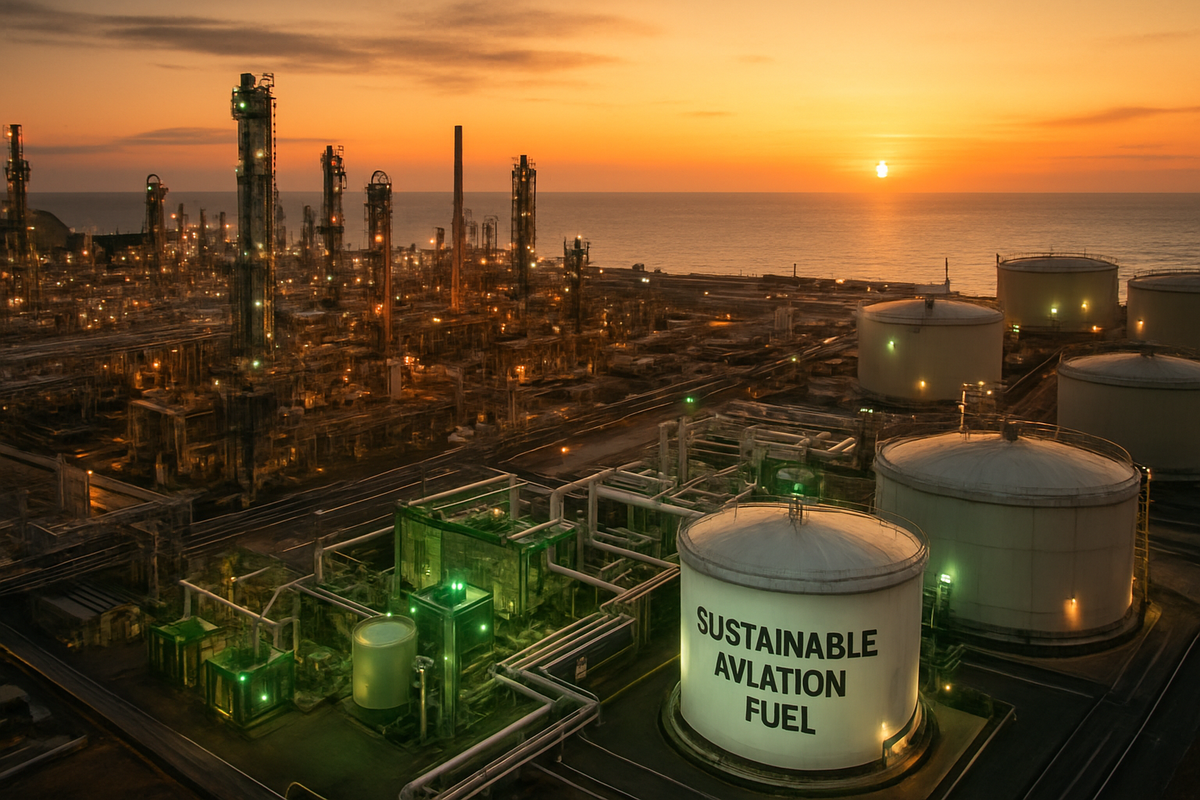
In a landmark move for the European energy landscape, the Italian energy giant Ludoil Energy Group has officially entered exclusive negotiations to acquire the ISAB refinery in Priolo, Sicily, from G.O.I. Energy. As of January 13, 2026, the deal marks a pivotal transition for Italy’s largest refinery—an asset that accounts for approximately 20% of the nation’s total refining capacity. The announcement comes alongside a dramatic restructuring of the site’s operations, including the immediate activation of Ludoil’s logistics network and a final, decisive break from its former Russian ties.
The immediate implications of this acquisition are profound. By bringing the Priolo refinery back under Italian ownership, the deal addresses long-standing national security concerns and provides a stable industrial path for an asset that has been under intense geopolitical scrutiny since the 2022 invasion of Ukraine. For the European oil supply chain, the shift signals a move away from the private-equity-led management of critical infrastructure toward a long-term, integrated industrial strategy focused on both fuel security and the green energy transition.
The Road to Priolo: A Strategic Shift in Mediterranean Refining
The path to Ludoil’s exclusive talks has been marked by a series of rapid escalations. On January 12, 2026, just 24 hours before the formal exclusivity was finalized, Ludoil and ISAB activated a strategic contract allowing Ludoil to begin the loading and sale of petroleum products directly from the Priolo site. This pre-emptive operational integration underscored the urgency of the transition. The situation reached a fever pitch on January 13, 2026, when ISAB unilaterally rescinded its remaining contracts with Lukoil (MCX: LKOH) Italia, citing non-compliance. This move led to the immediate resignation of Lukoil Italia’s CEO, Guido Orlando, effectively purging the last vestiges of Russian influence from the Sicilian plant.
The timeline leading to this moment began in May 2023, when G.O.I. Energy, a Cyprus-based private equity firm, purchased the refinery from Lukoil to prevent its closure due to European sanctions. However, G.O.I. Energy’s tenure was reportedly fraught with dissatisfaction regarding its offtake agreements with global commodity giant Trafigura. By late 2025, it became clear that the refinery required a massive capital infusion and a more integrated logistical partner to navigate the tightening European regulatory environment. Ludoil, led by the Ammaturo family, emerged as the preferred suitor due to its extensive existing infrastructure, including the jet fuel pipelines for Rome’s Fiumicino Airport.
Initial industry reactions have been cautiously optimistic. Market analysts view the move as a stabilization of the "Sicilian energy hub," which supports roughly 10,000 jobs in the region. The Italian government, which holds "Golden Power" oversight over strategic assets, has signaled support for the transition to a domestic operator. The move is seen as a victory for Rome’s efforts to ensure that critical energy nodes are managed by entities aligned with national and European Union energy policies.
Winners and Losers: Realigning the Energy Power Balance
The primary winner in this transaction is undoubtedly the Ludoil Energy Group. By acquiring ISAB, Ludoil transforms from a mid-stream logistics and distribution powerhouse into a vertically integrated energy major. This acquisition provides Ludoil with the scale to compete more directly with regional titans like Eni S.p.A. (BIT: ENI). Furthermore, Ludoil gains a massive platform to accelerate its "low-carbon" ambitions, utilizing ISAB’s capacity to pivot toward Sustainable Aviation Fuel (SAF) and Hydrotreated Vegetable Oil (HVO), sectors where Ludoil already has a strong foothold.
Conversely, G.O.I. Energy exits the Sicilian market after a relatively short and turbulent period. While the firm successfully bridged the gap during the post-sanction crisis of 2023, it struggled to provide the long-term industrial vision required for a facility of ISAB's complexity. Trafigura, though still a dominant force in global commodities, may see its influence at the Priolo site wane as Ludoil intends to utilize its own internal logistics and storage networks, potentially reducing the refinery's reliance on third-party traders for supply and offtake.
The clear loser in this shift is Lukoil (MCX: LKOH). The rescission of the final contracts on January 13, 2026, represents the total loss of its strategic foothold in the Mediterranean. For the broader market, other European refiners such as Saras S.p.A. (recently integrated into the Vitol Group) will now face a more formidable and modernized competitor in the Mediterranean basin. Investors in the energy sector should note that the "de-Russification" of European assets is now entering its final phase, with domestic industrial players replacing the "bridge" owners that stepped in during the initial 2023 crisis.
Wider Significance: Decarbonization and the New European Energy Map
The acquisition of the Priolo refinery is a microcosm of the broader trends currently reshaping the European energy sector. First and foremost, it highlights the accelerating trend of "National Energy Sovereignty." In an era of geopolitical volatility, European governments are increasingly wary of private equity or foreign-owned firms controlling vital infrastructure. The transition to Ludoil aligns the refinery with Italy’s national interest, ensuring that 20% of the country’s fuel supply is managed by a local entity with deep ties to the Italian industrial fabric.
Furthermore, this event serves as a bellwether for the "Refining-to-Bio" transition. Ludoil’s stated 10-year industrial plan focuses on converting parts of the Priolo complex into a hub for biofuels. This mirrors moves by other majors, such as TotalEnergies SE (EPA: TTE) and Neste Oyj (HEL: NESTE), who are aggressively pivoting toward SAF and renewable diesel. The significance for the European oil supply chain is twofold: it secures traditional fuel capacity in the short term while building the infrastructure necessary to meet the EU’s stringent "Fit for 55" decarbonization targets.
From a regulatory standpoint, the Ludoil-ISAB deal sets a precedent for how "Golden Power" can be used not just to block foreign interference, but to actively curate a domestic industrial champion. This approach may be emulated by other EU nations, such as Germany or Poland, as they continue to manage the fallout from the energy transition and the decoupling from Russian hydrocarbons. The deal effectively proves that traditional refining assets can still attract significant private capital if they are coupled with a viable green-transition roadmap.
The Road Ahead: Strategic Pivots and Market Challenges
In the short term, the market will be watching the completion of Ludoil’s due diligence process. The integration of ISAB into Ludoil’s existing retail network—which includes over 150 stations under the Staroil and Iperstaroil brands—will be a massive logistical undertaking. The primary challenge will be the immediate capital expenditure required to modernize the plant’s environmental safeguards and begin the conversion to biofuel production. Ludoil will need to balance the high costs of these upgrades with the volatile margins of the traditional refining sector.
Long-term, the success of this acquisition will depend on Ludoil’s ability to secure stable crude supplies that are independent of the Mediterranean's traditional reliance on Russian Urals. Potential strategic pivots could include deeper partnerships with North African producers or North Sea suppliers to ensure a diversified feedstock. Additionally, as the European automotive market shifts toward electrification, Ludoil’s focus on the aviation and heavy transport sectors through SAF and HVO will be critical to the refinery’s survival beyond 2030.
Final Assessment: A New Era for Italian Energy
The entry of Ludoil into exclusive talks for the Priolo refinery marks the end of an era of uncertainty for one of Europe’s most critical industrial sites. By severing the final ties with Lukoil and moving toward a domestic, industrial-led ownership model, Italy has fortified its energy security while positioning itself as a leader in the Mediterranean’s green energy transition. The deal reflects a broader market shift where integrated logistics and long-term decarbonization strategies are the new prerequisites for managing traditional energy assets.
Moving forward, investors should keep a close eye on the formal closing of the deal and any subsequent announcements regarding Ludoil’s capital investment plans for the Priolo site. The ability of Ludoil to successfully navigate the "Refining-to-Bio" pivot will be a major indicator of the future viability of traditional refining assets across Europe. As the energy map of the continent continues to be redrawn, the Priolo refinery stands as a testament to the enduring importance of strategic infrastructure in an age of transition.
This content is intended for informational purposes only and is not financial advice.