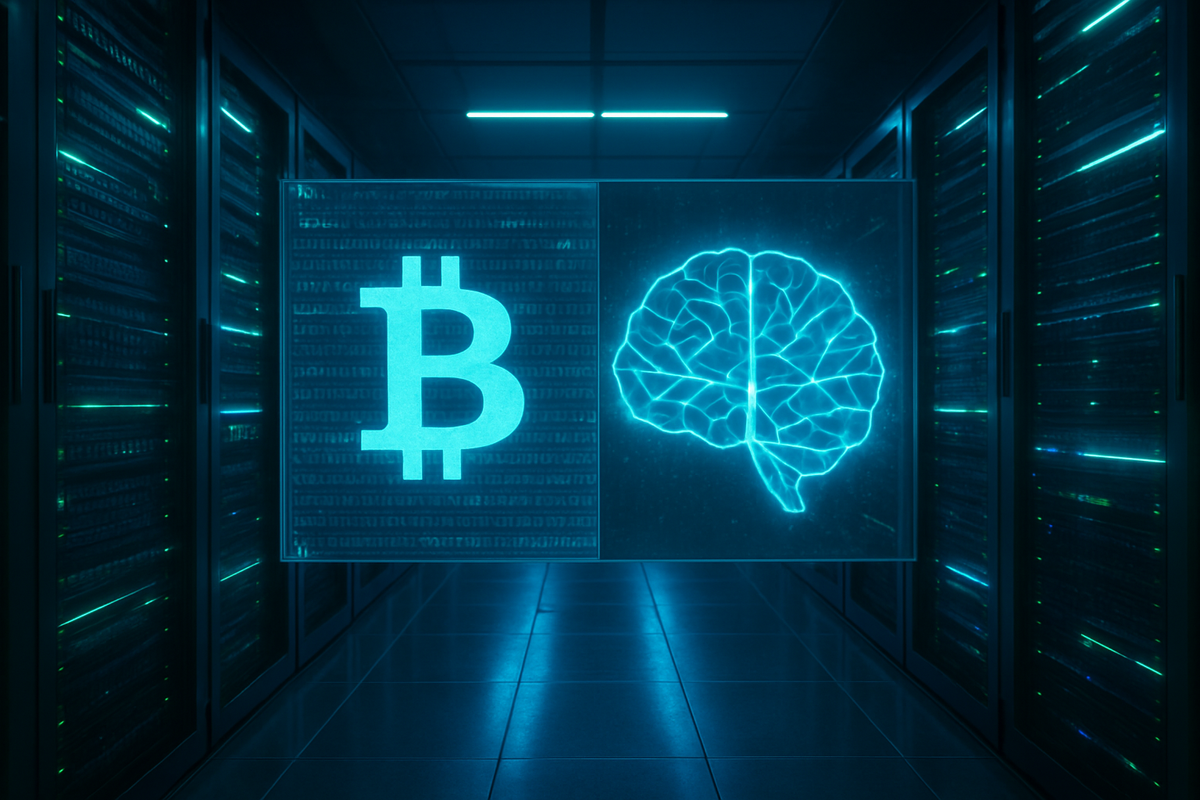
As the final trading days of 2025 approach, the landscape for digital asset infrastructure has undergone a seismic transformation. What were once considered "pure-play" cryptocurrency mining firms have effectively rebranded into high-performance computing (HPC) and artificial intelligence (AI) data center giants. This strategic pivot, accelerated by the 2024 Bitcoin halving and an insatiable global appetite for AI compute, reached a symbolic peak this week as institutional recognition of the sector hit an all-time high.
The inclusion of Bitfarms Ltd. (TSX: BITF) (NASDAQ: BITF) into the S&P/TSX Composite Index on December 22, 2025, serves as a definitive milestone in this evolution. This move marks the transition of the sector from the speculative fringes of the market into the bedrock of institutional portfolios. For investors, the narrative has shifted from tracking the volatile price of Bitcoin to valuing the massive power capacity and "ready-for-service" infrastructure these companies control.
The Institutional Graduation of Bitfarms and the AI Infrastructure Rush
The inclusion of Bitfarms into Canada’s benchmark index was the culmination of a year-long effort to diversify revenue and professionalize corporate governance. Following the announcement, Bitfarms shares surged by over 11%, driven by mandatory buying from index-tracking funds and a renewed interest from institutional desks that were previously restricted from crypto-heavy exposures. This milestone followed the company’s aggressive move to convert its 18 MW Washington State facility into an AI-ready data center, utilizing advanced liquid cooling technology to meet the thermal demands of modern GPUs.
This institutional validation is not an isolated event but the result of a grueling 18-month transition. Since the Bitcoin halving in April 2024, which slashed mining rewards by 50%, the industry has faced a "survival of the fittest" scenario. Leading firms realized that their most valuable assets were not the Bitcoin they held, but their long-term power contracts and grid connections. By the second half of 2025, the market began to re-rate these companies based on "value per megawatt" rather than just "hashrate," leading to a decoupling of mining stocks from the daily price action of Bitcoin.
Key industry players have spent much of 2025 aggressively pivoting. MARA Holdings, Inc. (NASDAQ: MARA), formerly known as Marathon Digital, led the charge by acquiring a majority stake in the French HPC firm Exaion in August 2025. This acquisition provided MARA with immediate access to Tier-4, GDPR-compliant data centers in Europe, positioning them as a leader in "Sovereign AI"—a growing trend where nations seek to localize their AI compute power. Meanwhile, Riot Platforms, Inc. (NASDAQ: RIOT) signaled its own shift by hiring its first Chief Data Center Officer and reallocating 600 MW of its Corsicana, Texas facility toward AI and HPC hosting, even at the expense of its short-term Bitcoin mining growth targets.
Winners and Losers in the Race for Megawatts
The primary winners in this strategic shift are the "Mega-Miners" who secured large-scale power capacity before the AI boom drove energy prices to historic highs. MARA Holdings, Inc. (NASDAQ: MARA) has emerged as a frontrunner, with analysts at Cantor Fitzgerald recently raising their price targets based on the company's ability to generate stable, high-margin revenue from AI hosting. By diversifying into the European market, MARA has insulated itself from U.S. regulatory fluctuations while tapping into the high-demand AI sector.
Riot Platforms, Inc. (NASDAQ: RIOT) also stands to gain significantly as it leverages its massive infrastructure in Texas. By treating Bitcoin mining as a "flexible load" that can be toggled to stabilize the grid, and AI compute as a "base load" for steady income, Riot is creating a dual-revenue model that is highly attractive to infrastructure investors. Other early movers like Core Scientific, Inc. (NASDAQ: CORZ) and Iris Energy Limited (NASDAQ: IREN) have also seen their valuations soar as they signed multi-year hosting deals with AI giants like CoreWeave, effectively turning their mining farms into high-tech real estate.
Conversely, the "losers" in this new era are the small-to-mid-sized miners who lacked the capital to upgrade their facilities for AI. The specialized hardware required for AI—specifically Nvidia’s Blackwell chips—requires significantly more cooling and power density than traditional Bitcoin ASICs. Companies that failed to secure "ready-for-service" power or lacked the balance sheet to pivot have faced extreme margin compression as Bitcoin’s network difficulty reached record highs in late 2025. These firms are increasingly becoming acquisition targets for larger players looking to "land grab" their remaining power capacity.
A Fundamental Shift in Industry Trends and Policy
The pivot to AI represents a broader trend of "energy-first" corporate strategy. In 2025, the scarcity of power has become the primary bottleneck for the global tech economy. Bitcoin miners, who were once criticized for their energy consumption, are now being viewed as essential partners for grid stability and the rapid deployment of AI infrastructure. This has led to a significant shift in regulatory sentiment; instead of facing bans, miners are increasingly being incentivized to build "dual-purpose" data centers that can support both the financial network of Bitcoin and the computational needs of AI.
Historically, this shift mirrors the evolution of the telecommunications industry in the late 1990s, where companies that owned the "pipes" eventually became more valuable than those just providing the content. In the current context, the miners own the "power pipes." This has ripple effects on competitors in the traditional data center space, such as Equinix or Digital Realty, who now find themselves competing for the same electricity and land with agile, energy-expert mining firms.
Furthermore, the rise of "Sovereign AI" has introduced a geopolitical layer to the industry. As nations recognize that AI compute is a matter of national security, companies like MARA that can build localized, high-security data centers are finding themselves in a unique position to win government contracts. This diversification into "infrastructure-as-a-service" (IaaS) provides a level of revenue stability that was unheard of in the "crypto-winter" eras of the past.
The Road Ahead: What to Expect in 2026
In the short term, the market will likely continue to reward companies that announce concrete AI hosting contracts. The "speculative" phase of the AI pivot is ending, and investors are now demanding to see real EBITDA contributions from non-mining activities. We can expect more "rebranding" events as companies seek to distance themselves from the "mining" label, which many institutional investors still associate with high volatility and environmental concerns.
Long-term, the strategic challenge will be managing the capital expenditure required to maintain both a competitive Bitcoin hashrate and a cutting-edge AI fleet. The technology cycles for AI hardware are significantly faster than those for Bitcoin mining, requiring a more sophisticated approach to hardware lifecycle management. We may see a total bifurcation of the sector, where some firms become pure AI infrastructure providers, while others remain "hybrid" operators that use Bitcoin mining as a way to monetize excess power during off-peak hours.
Market opportunities will likely emerge in the fusion of energy production and data centers. Watch for miners to begin acquiring their own power generation assets—such as small modular reactors (SMRs) or large-scale solar farms—to ensure they have a guaranteed, low-cost "behind-the-meter" power source. This would effectively turn these companies into vertically integrated energy and compute utilities.
Conclusion: A New Era for Digital Infrastructure
The inclusion of Bitfarms into the TSX Composite and the aggressive AI pivots by MARA and Riot signal the end of the "hobbyist" era of Bitcoin mining. The sector has matured into a sophisticated pillar of global digital infrastructure. By diversifying into AI and HPC, these companies have not only secured their survival post-halving but have also positioned themselves at the heart of the most important technological shift of the decade.
Moving forward, the market will treat these stocks less like "proxy-Bitcoins" and more like specialized infrastructure plays. The successful companies will be those that can master the complex logistics of AI data centers while maintaining the operational efficiency that allowed them to survive the volatile world of crypto. For investors, the key metric to watch in the coming months will be the "percentage of revenue from non-mining activities." As this number grows, the "crypto discount" that has long weighed on these stocks is likely to vanish, replaced by the premium multiples reserved for the backbone of the AI revolution.
This content is intended for informational purposes only and is not financial advice.