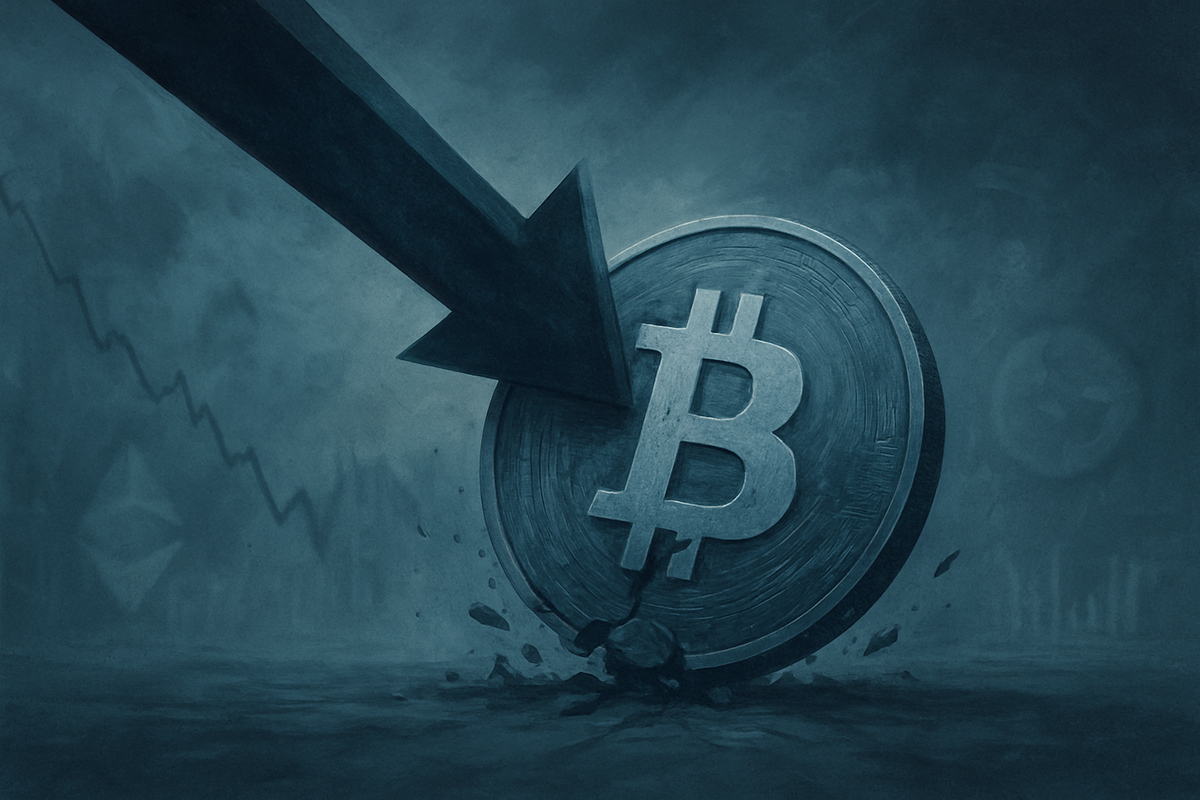
The cryptocurrency market is grappling with a severe and deepening selloff in Bitcoin (BTC), sending shockwaves through the digital asset ecosystem and dragging down related public companies. Following an exhilarating run to an all-time high in early October 2025, the world's largest cryptocurrency has experienced a precipitous decline, plummeting by nearly a third from its peak. This downturn, fueled by a complex interplay of macroeconomic headwinds, regulatory uncertainties, and a pervasive "risk-off" sentiment, has ignited fears of a prolonged crypto winter and forced a re-evaluation of digital asset investments.
The immediate implications are stark: a broad-based market contraction, with altcoins suffering even steeper losses, and a significant hit to the valuations of publicly traded companies with substantial exposure to the crypto space. Investor confidence has eroded, pushing the market into "Extreme Fear" territory, as market participants brace for continued volatility and potential further declines. The unfolding situation underscores the increasing interconnectedness of the crypto market with traditional finance and highlights its vulnerability to global economic shifts and central bank policies.
Unpacking the Crypto Carnage: A Timeline of Decline
Bitcoin's recent trajectory has been a dramatic reversal from the euphoria of early October 2025, when it soared to an all-time high, briefly touching approximately $126,251. This peak, however, proved to be a fleeting moment of triumph before a sharp correction took hold. By late November, BTC had fallen to a seven-month low, trading around $88,000, setting the stage for an even more brutal start to December.
On December 1, 2025, the selloff intensified dramatically, with Bitcoin dropping below $84,000, and some reports indicating prices as low as $80,553 in New York trading. This marked a staggering nearly 32% decline from its October peak. November 2025 was particularly punishing, recording Bitcoin's sharpest monthly drop in over three years, with a more than 21% decline. The year 2025, which began with such promise, now sees Bitcoin having lost about 7.24% of its opening value, with Q1 2025 being its weakest since 2018.
Several key factors converged to create this perfect storm. A dominant "risk-off" sentiment in global financial markets, driven by broader economic uncertainties, saw investors shying away from speculative assets. Uncertainty surrounding the Federal Reserve's stance on interest rates, particularly mixed signals regarding a potential third rate cut in December, dampened appetite for riskier ventures. Adding to the pressure were hawkish comments from the Bank of Japan (BOJ) hinting at a potential interest rate hike, which contributed to global market instability. The crypto market also faced weakening liquidity, evidenced by substantial outflows of over $3.5 billion from spot Bitcoin Exchange-Traded Funds (ETFs) in November. This lack of depth exacerbated selling pressure, triggering massive forced liquidations of nearly $1 billion in leveraged crypto positions on December 1 alone, extending a broader deleveraging event that wiped out approximately $19 billion in early October. Even long-term holders, typically known for "HODLing," engaged in significant profit-taking, offloading roughly 800,000 BTC in November. Concerns surrounding Strategy (NASDAQ: MSTR), a major corporate Bitcoin holder, and its mNAV ratio approaching a critical threshold, fueled fears of potential Bitcoin sales. Finally, a warning from the People's Bank of China about illegal digital token activities and a $9 million hack on the crypto investment platform Yearn Finance further contributed to the negative sentiment.
Companies on the Brink: Winners and Losers in the Volatility
The deepening Bitcoin selloff has had a profound and immediate impact on publicly traded companies with significant ties to the cryptocurrency market, creating a clear distinction between potential losers and those few who might navigate the storm relatively unscathed. The vast majority, however, are feeling the pain.
Leading the charge of companies experiencing significant losses are crypto-linked equities. Trading platform operators like Coinbase (NASDAQ: COIN) and Robinhood (NASDAQ: HOOD) saw their stock prices drop by more than 6% on December 1, with Coinbase shares sliding nearly 25% over the preceding month. These companies rely heavily on trading volumes and transaction fees, which typically plummet during bear markets, directly impacting their revenue streams and profitability. Bitcoin mining companies, too, are under immense pressure. Firms such as Mara Holdings (NASDAQ: MARA) and Riot Platforms (NASDAQ: RIOT) experienced declines of 8% and 5.4% respectively. Lower Bitcoin prices directly reduce the value of the BTC they mine, while operational costs remain high, squeezing profit margins and potentially leading to insolvencies for less efficient miners. Strategy (NASDAQ: MSTR), which holds a substantial amount of Bitcoin on its balance sheet, saw its shares plunge by 11% on December 1. The company's valuation is closely tied to Bitcoin's price, and a sustained downturn could necessitate difficult decisions regarding its substantial crypto holdings.
While the current environment is challenging for most, some entities might find themselves in a relatively stronger position. Exchanges with robust derivatives offerings might see increased hedging activity, though overall volume is likely to be down. Stablecoin issuers, whose assets are pegged to fiat currencies, could see increased demand as investors seek refuge from volatility. Companies with diversified revenue streams beyond mere crypto holdings or trading fees, or those with strong balance sheets to weather a prolonged downturn, are also better positioned. However, the overarching sentiment is one of caution, and even these players are not immune to the broader market's contagion.
Broader Significance: Echoes of Past and Future Trends
The current Bitcoin selloff is more than just a price correction; it is a significant event that fits into broader industry trends and carries wider implications for the financial landscape. It starkly highlights the increasing correlation between the cryptocurrency market and traditional risk assets, particularly tech stocks. Fears of an "AI bubble" and a decline in tech giants, including "Magnificent Seven" companies like Meta Platforms Inc. (NASDAQ: META) and Nvidia (NASDAQ: NVDA), have prompted investors to offload other volatile assets, demonstrating that crypto is no longer an entirely uncorrelated haven.
This event also underscores the profound impact of macroeconomic factors and central bank policies on digital assets. The uncertainty surrounding Federal Reserve interest rates and the hawkish pivot by the Bank of Japan have ripple effects across global markets, pushing investors towards safer assets and away from speculative ventures like cryptocurrencies. This sensitivity to traditional financial indicators suggests a maturation, albeit a painful one, of the crypto market, integrating it further into the global financial system. Potential ripple effects on competitors and partners are significant; a sustained downturn could lead to consolidation in the industry, with smaller, less capitalized projects and firms struggling to survive. Partnerships built on bullish market sentiment might be re-evaluated, and investor confidence in the broader digital asset space could be severely tested.
From a regulatory perspective, the selloff, coupled with incidents like the People's Bank of China's warning and the Yearn Finance hack, could intensify scrutiny from global regulators. Governments and financial bodies might cite market instability and consumer protection concerns to push for stricter oversight, licensing requirements, and even outright bans in certain jurisdictions. Historically, such sharp corrections have been dubbed "crypto winters," periods of prolonged bearish sentiment that cleanse the market of unsustainable projects and overleveraged participants. Comparisons to past downturns, such as the 2018 bear market or the mid-2022 slump, serve as a stark reminder of the market's cyclical nature and its capacity for both explosive growth and dramatic retrenchment.
What Comes Next: Navigating the Uncertainty
The path forward for Bitcoin and the broader cryptocurrency market is fraught with uncertainty, presenting both significant challenges and potential opportunities. In the short term, continued volatility is almost a certainty. The market is still in a deleveraging phase, and further forced liquidations could exacerbate price declines. Investors should anticipate sharp price swings, driven by news flow, macroeconomic data, and shifts in investor sentiment. The "Extreme Fear" prevalent in the market suggests that a bottom may not yet be in, and a test of lower support levels is a distinct possibility.
In the long term, the market's resilience will be tested. Strategic pivots will be crucial for companies in the space. Exchanges may need to diversify revenue streams beyond spot trading fees, perhaps focusing on derivatives, staking services, or even venturing into traditional finance offerings. Bitcoin miners will need to optimize their operations, focusing on energy efficiency and potentially exploring alternative revenue models to survive. For investors, this period of significant price depreciation could present a long-term buying opportunity for those with conviction in the underlying technology and a high tolerance for risk. However, careful due diligence and a focus on projects with strong fundamentals will be paramount.
Potential scenarios range from a prolonged bear market, mirroring past crypto winters, where prices languish for an extended period, leading to significant industry consolidation. Alternatively, a swift policy pivot by central banks, particularly a clearer signal of interest rate cuts, could inject renewed optimism and trigger a rebound. Increased institutional adoption, driven by greater regulatory clarity and more robust infrastructure, could also provide a much-needed catalyst for recovery. Conversely, further regulatory crackdowns or major security breaches could deepen the crisis. Investors should closely monitor macroeconomic indicators, central bank announcements, ETF flow data, and evolving regulatory landscapes for clues about the market's next significant move.
A Market in Flux: Key Takeaways and Future Watchpoints
The recent deepening selloff in Bitcoin serves as a powerful reminder of the inherent volatility and evolving dynamics of the cryptocurrency market. The key takeaways from this event are clear: the crypto market is increasingly sensitive to global macroeconomic conditions, central bank policies wield significant influence, and the risks associated with excessive leverage can trigger cascading liquidations that amplify downturns. The days of crypto operating in a silo, entirely detached from traditional finance, appear to be over, replaced by a complex interplay of forces.
Moving forward, the market will likely remain in a state of flux, characterized by elevated volatility and a cautious investor sentiment. The current environment is a critical test of resilience for the entire digital asset ecosystem, from individual investors to large institutional players and public companies. Those with strong fundamentals, adaptive business models, and robust risk management strategies are best positioned to navigate these turbulent waters. The shakeout could ultimately lead to a more mature and sustainable industry, but the path to that future will undoubtedly be challenging.
Investors should closely watch several critical factors in the coming months. Foremost among these are the pronouncements and actions of the Federal Reserve and other major central banks regarding interest rates and monetary policy. Global economic indicators, particularly inflation and growth data, will also heavily influence risk appetite. On the crypto-specific front, monitoring the flows into and out of spot Bitcoin ETFs will provide insights into institutional sentiment. Crucially, any new regulatory developments, whether from the US, Europe, or Asia, could significantly impact market structure and investor confidence. Finally, the ability of crypto-linked companies to adapt their strategies and shore up their balance sheets will be a key determinant of their survival and future success. The market's ability to absorb further shocks and find a new equilibrium will define the narrative for the foreseeable future.
This content is intended for informational purposes only and is not financial advice