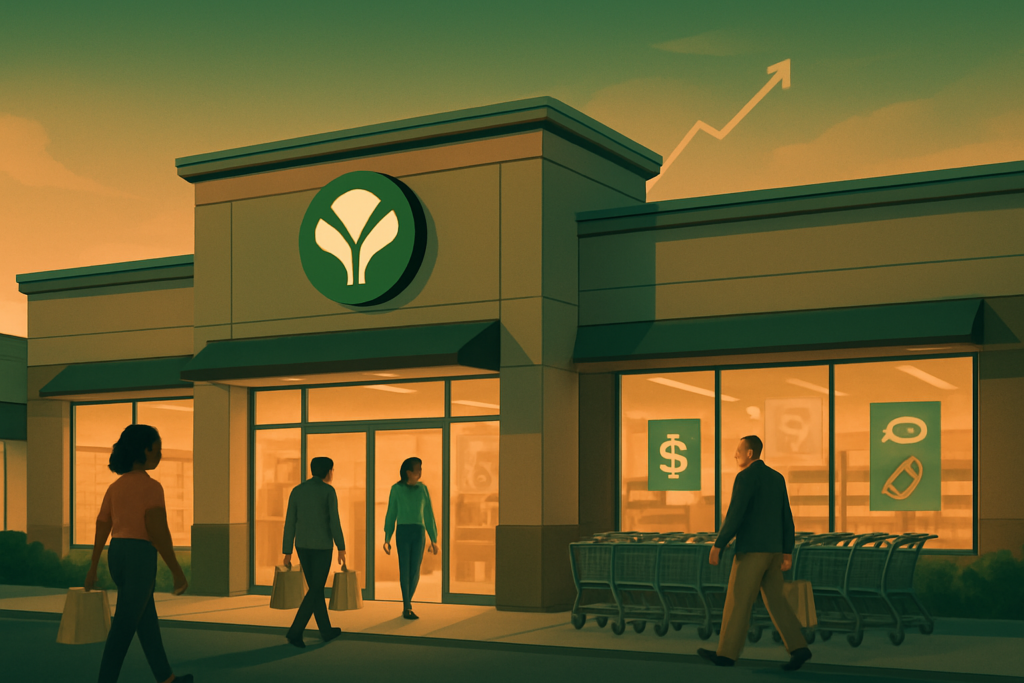
As of March 16, 2026, Dollar Tree, Inc. (NASDAQ: DLTR) stands at a pivotal crossroads in retail history. Long known as the steadfast bastion of the $1.00 price point, the company has spent the last 24 months undergoing a radical metamorphosis. Today, the "Dollar Tree" name is synonymous not with a single price, but with a sophisticated "multi-price" value proposition that has successfully captured a new demographic of middle-to-high-income shoppers. With the recent divestiture of the long-struggling Family Dollar banner in 2025, Dollar Tree has emerged as a leaner, higher-margin "pure play" entity. This feature explores how a company once criticized for stagnant growth and operational mishaps has reinvented itself into one of the most resilient stories in the consumer discretionary sector.
Historical Background
Founded in 1986 by Macon Brock, Doug Perry, and K.R. Perry in Norfolk, Virginia, Dollar Tree began as "Only $1.00," a retail concept predicated on extreme value and simplicity. For decades, the company thrived on the discipline of the single-price model, expanding rapidly across North America. A significant turning point occurred in 2015 when Dollar Tree acquired Family Dollar for $8.5 billion, a move intended to challenge industry leader Dollar General (NYSE: DG).
However, the acquisition proved difficult to integrate. Family Dollar stores were often plagued by underinvestment and logistical hurdles, leading to years of margin dilution. By 2023, activist investors and a new leadership team led by Rick Dreiling initiated a "Portfolio Optimization Review." This led to the closure of nearly 1,000 stores in 2024 and the eventual total divestiture of the Family Dollar brand in mid-2025, returning the company to its core Dollar Tree roots.
Business Model
Dollar Tree’s current business model revolves around its "Multi-price 3.0" strategy. Moving away from the rigid $1.00 (and later $1.25) ceiling, the company now offers a curated assortment of goods ranging from $1.50 to $7.00, with select high-value items reaching $10.00.
Revenue is split between two primary categories:
- Consumables: Food, health, and beauty products that drive frequent foot traffic.
- Discretionary: Seasonal décor, party supplies, and toys that offer higher margins.
By expanding its price ceiling, Dollar Tree has been able to stock "need-based" essentials like frozen proteins and larger-format household chemicals, which were previously impossible to sell at $1.25. This has shifted the customer base; as of early 2026, nearly 60% of new customer growth is derived from households earning over $100,000 annually, seeking value amid persistent inflationary pressures.
Stock Performance Overview
The last decade for DLTR has been a tale of two eras. Between 2016 and 2024, the stock largely underperformed the broader S&P 500, weighed down by the "Family Dollar drag" and skepticism over the $1.25 price hike. However, the period from mid-2024 to March 2026 has seen a significant re-rating.
- 1-Year Performance: The stock has seen a 22% surge following the finalized sale of Family Dollar and the realization of higher margins from the multi-price rollout.
- 5-Year Performance: After bottoming out during the 2023-2024 restructuring phase, the stock has recovered to trade near its all-time highs, reflecting a more efficient capital structure.
- 10-Year Performance: Long-term holders have seen modest gains, though much of the "lost decade" of 2015-2023 was reclaimed only recently through the successful execution of the turnaround plan.
Financial Performance
In the fiscal year 2025 results reported today, Dollar Tree highlighted its new financial profile as a "continuing operations" entity.
- Net Sales: $19.4 billion (representing the core Dollar Tree banner).
- Adjusted EPS: $5.94, surpassing analyst expectations.
- Same-Store Sales: Increased by 5.3% year-over-year, driven by a higher average ticket size as customers embraced the $3 to $5 price points.
- Margins: Gross margin expanded to a record 39.1%, aided by a "cleaner" inventory and the absence of the lower-margin Family Dollar revenue stream.
- Debt & Cash Flow: The company utilized the $1 billion proceeds from the Family Dollar sale to pay down high-interest debt and initiate a $2.5 billion share repurchase program.
Leadership and Management
The architecture of this turnaround was designed by Rick Dreiling, the retail veteran who stepped down in late 2024. Today, the company is led by CEO Michael (Mike) Creedon Jr. Previously the COO, Creedon has focused on "operational excellence"—specifically, automating the supply chain and cleaning up store environments. Under his leadership, the management team has improved its governance reputation, moving past the regulatory fines of 2023 and 2024 (such as the $41.7 million DOJ settlement related to warehouse conditions) to become a leader in retail compliance.
Products, Services, and Innovations
Innovation at Dollar Tree is currently centered on the "store-within-a-store" concept and logistical automation.
- Dollar Tree Plus: This section of the store features items above the $1.25 floor. In 2026, this concept has evolved into a seamless multi-price layout across the entire store.
- Rotacart Technology: A major internal innovation, the Rotacart delivery system has streamlined the unloading of trucks, reducing labor costs by 20% and improving "in-stock" levels for high-demand items.
- Private Labels: The company has expanded its "exclusive brands," allowing it to maintain value while capturing higher margins than national brands.
Competitive Landscape
Dollar Tree operates in a crowded value retail space, yet it occupies a unique niche.
- Dollar General (DG): While DG focuses on rural markets and "fill-in" grocery trips, Dollar Tree thrives in suburban and urban markets with a "treasure hunt" shopping experience.
- Five Below (NASDAQ: FIVE): A direct competitor for the teen and discretionary market, though Dollar Tree’s expansion into $5+ price points has created a more direct rivalry.
- Walmart (NYSE: WMT) & Amazon (NASDAQ: AMZN): Both remain the primary threats for consumables. Dollar Tree competes by offering smaller pack sizes and a more convenient "in-and-out" physical footprint.
Industry and Market Trends
The "Trade-Down" effect remains the most significant tailwind for the dollar store sector. As inflation and housing costs squeeze middle-class budgets, the stigma of shopping at value retailers has vanished. Additionally, the retail sector is seeing a shift toward "micro-trips"—where consumers stop for 5–10 minutes to pick up a few items rather than doing a 90-minute weekly grocery shop. Dollar Tree’s footprint is perfectly situated for this trend.
Risks and Challenges
Despite its success, DLTR is not without risks:
- Shrink (Inventory Theft): Retail theft remains a persistent drain on margins, though 2025 saw a slight stabilization due to new AI-monitored checkout systems.
- Execution Risk: Balancing the "dollar store" identity while raising prices to $10 is a delicate branding exercise. If the value perception is lost, customers may return to big-box retailers.
- Supply Chain Sensitivity: As a significant importer of goods, Dollar Tree is highly vulnerable to shipping rate volatility and geopolitical tensions in the Pacific.
Opportunities and Catalysts
- Grocery Expansion: With the multi-price model, Dollar Tree has only just begun to scratch the surface of refrigerated and frozen foods.
- E-commerce Integration: A renewed focus on "buy online, pick up in-store" (BOPIS) for party supplies and seasonal goods offers a significant digital growth lever.
- M&A and Buybacks: With a cleaner balance sheet, the company is well-positioned for opportunistic acquisitions of smaller discount chains or continued aggressive share repurchases.
Investor Sentiment and Analyst Coverage
Wall Street has largely shifted from a "Wait and See" approach in 2024 to an "Overweight" consensus in 2026. Institutional investors, including several prominent hedge funds, have increased their positions following the Family Dollar divestiture. The consensus price target currently sits at $152.00, with many analysts highlighting that the company’s P/E ratio is finally beginning to align with its higher-growth "pure play" peers.
Regulatory, Policy, and Geopolitical Factors
Dollar Tree remains under the microscope of the FDA and OSHA regarding store safety and sanitation following past lapses. Furthermore, the company’s reliance on overseas manufacturing makes it a primary subject of trade policy discussions. Any significant changes in tariffs on consumer goods would necessitate further price adjustments, testing the elasticity of its customer base.
Conclusion
Dollar Tree, Inc. has successfully navigated one of the most complex corporate turnarounds in recent retail history. By shedding the underperforming Family Dollar segment and embracing a multi-price future, the company has transformed its financial profile and widened its market appeal. Investors should watch for the continued success of the multi-price rollout and the company's ability to maintain its newfound high-income demographic. While risks like inventory shrink and geopolitical trade tensions remain, the "new" Dollar Tree is a leaner, more profitable, and more strategic competitor than ever before.
This content is intended for informational purposes only and is not financial advice. Today’s date: 3/16/2026.