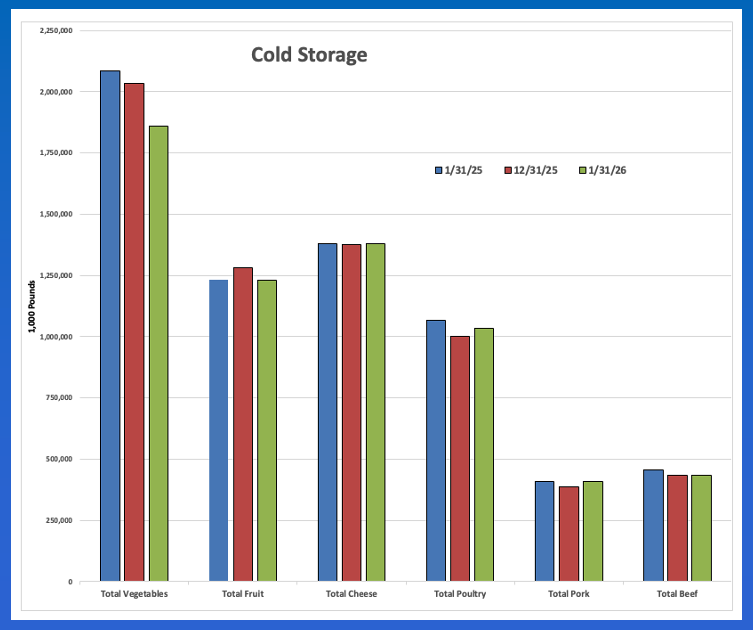
- The latest USDA Cold Storage numbers, for January 31, 2026, showed all beef stocks were unchanged from the previous month, despite a monthly decrease of 8% in cattle marketings.
- Total vegetable stocks were down 8% for the month while fruits decreased by 4% month-to-month.
- Total chicken stocks were also down 4% from the end of December.
If I recall correctly, it was at the Barchart Grain Merchandising & Technology Roadshow meeting in Manhattan, Kansas last July when an attendee gave me a key piece of economic advice: We’ll know the economy has turned bearish when the stake of a bet is a salad rather than a steak. Or something to that effect. You’ll recall my view of the word “economy” is best summarized by a speech on the animated television show South Park, with the bottom line being it is just an idea created by people. These days, the view isn’t determined by actual economics but rather politics. Which is why I think what the gentleman told me at the meeting has more weight than all the government statistics economists spend so much time arguing about.
Speaking of government numbers, the USDA/NASS Cold Storage report for January 31, 2026, was released Tuesday afternoon. While the data raises an interesting economic discussion, in the end we have to keep in mind they are still only government numbers from an agency that – how can I put this nicely – isn’t necessarily viewed as releasing accurate data. Particularly these days. But again, that’s a topic for another day.
So, let’s address the elephant in the room. (Keeping in mind elephants are vegetarian.) When the latest Cold Storage numbers were digested, did they indicate a) The US consumer was backing away from higher priced red meat (e.g. beef) and turning toward lower priced protein (e.g. chicken), what could be considered an economic warning flag and or b) The United States is seeing a growing vegetarian movement.
Let’s take a look at some of the numbers in question:
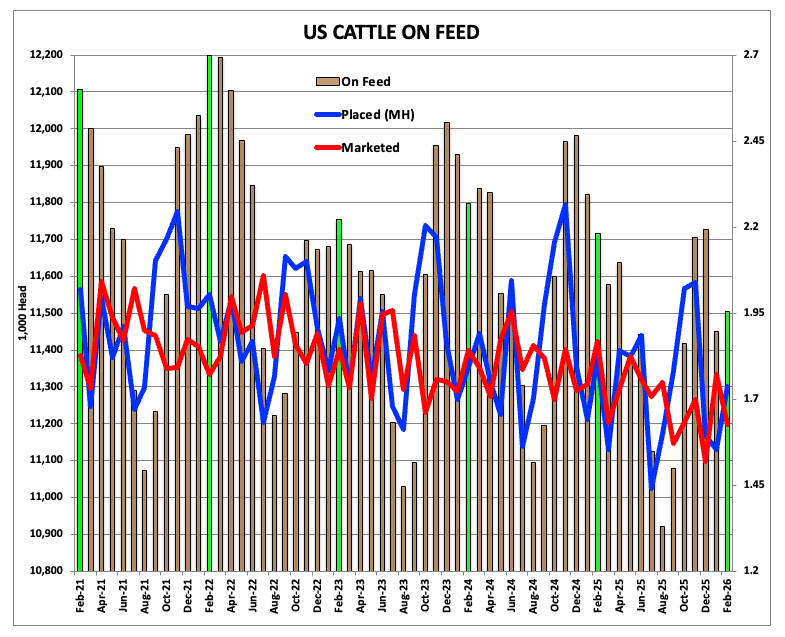
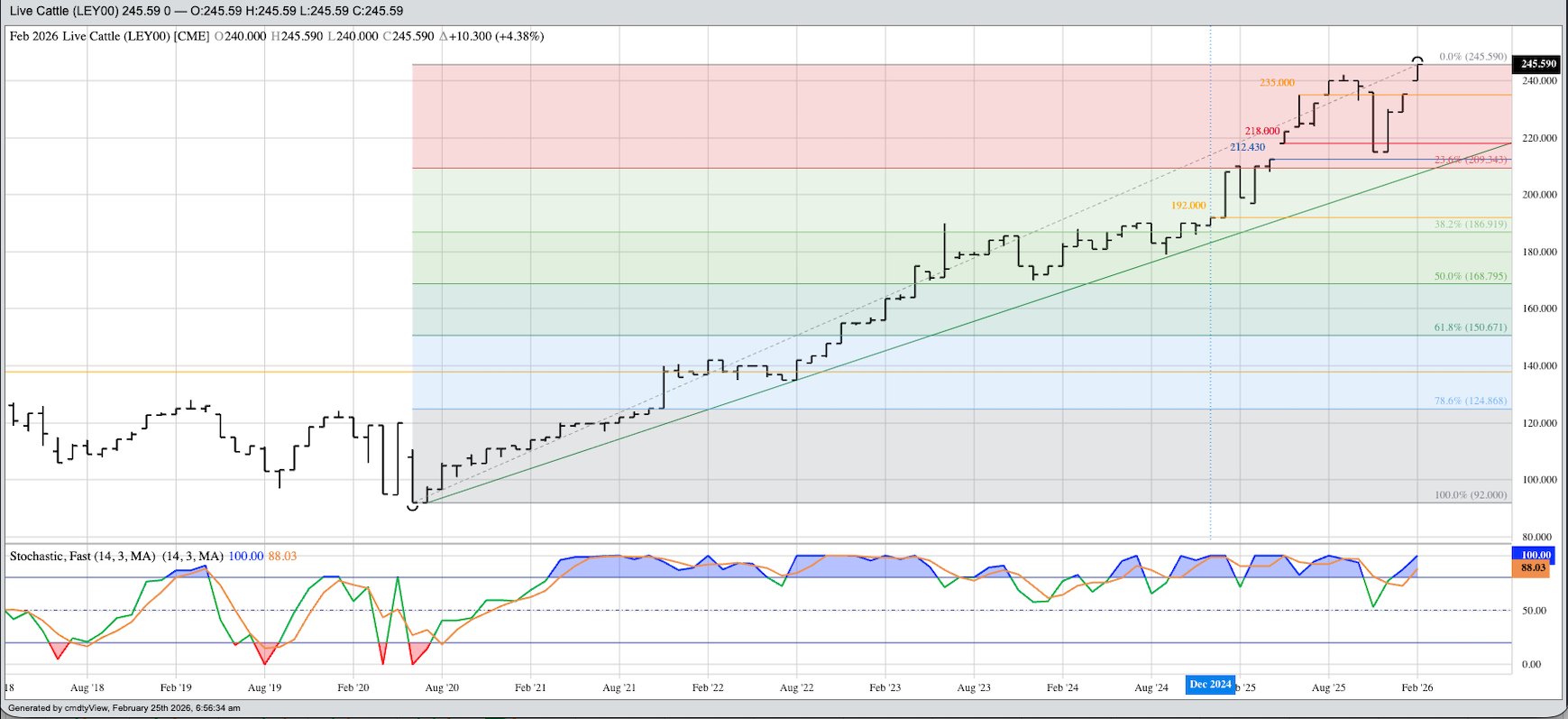
Total red meat stocks were up 3% for the month but down 2% from last year. However, total beef was basically unchanged from the previous month but down 4% from last year (see first chart). A couple things stand out to me: The year-to-year decrease remains consistent with what we saw last month, continuing to indicate the US cattle herd is not growing. However, the number of head marketed during January 2026 were reportedly down 13% from the previous year (February 1 Cattle on Feed, see chart above). The unchanged month-to-month stocks number was despite cattle marketed reportedly decreasing by 8% during January 2026. On the other hand, the live cattle Cash Index (LEY00) has posted a new all-time high of $245.59 so far during February meaning the pieces of the puzzle don’t seem to fit. For the record, total pork was up 6% from the previous month and up 1% from last year, accounting for the change in total red meat stocks.
On the fowl side of the freezer, total poultry stocks were up 3% for the month but down 3% from last year. Total chicken stocks were down 4% month-to-month and down 1% year-to-year while total turkey stocks were up 36% for the month but down 8% for the year. There are some items to unpack here. Let’s talk to turkey to start. The month-to-month spike in stocks is seasonal, coming after the US holiday demand for gobblers. Why there isn’t year-round demand remains a mystery to me. After all, if someone would rather have poultry than beef, for whatever reason including budget, turkey would seem to give you more for your dollar. But that’s not the way it is. Some things will never change… (From The Way It Is by Bruce Hornsby. Those of you not old enough to remember can look it up.)
As for the chicken numbers, month-to-month changes continue to yo-yo from small gains (December) to small losses (January). Before we go all-in on the idea US consumers are turning to chicken and away from beef, the One Month Wisdom (One month does not a trend make) tells us we need to see some consistency over the course of a number of months.
Let’s head over to the produce section.
- Total fruit was down 4% for the month and on par with last year
- Frozen orange juice was down 3% from last month and up 27% from last year
- Total vegetables were down 8% for the month and down 11% from January 31, 2025
This was at least the third consecutive month with a reported decrease in frozen vegetable stocks (keeping in mind the US government was shut down for a while with no reports released). At face value, the Cold Storage report doesn’t give us all the information needed to form a reasonable conclusion, most notably if production of vegetables in the US has declined while imports have decreased due to the administration’s one-word trade policy. I do know the price of vegetables at the store have increased, like everything else these days, just not to the same degree as other items (e.g. proteins).
As for the idea the US is turning toward vegetarianism, would you like to bet a salad on it?
On the date of publication, Darin Newsom did not have (either directly or indirectly) positions in any of the securities mentioned in this article. All information and data in this article is solely for informational purposes. For more information please view the Barchart Disclosure Policy here.
More news from Barchart