Once again, the energy markets are in a high-stakes standoff, which means traders have to decide whether to stand down or get involved.
For the second time in the past 12 months, geopolitical friction involving Iran is creating a "fear premium" in crude oil (QAK26) prices. For investors, this volatility presents a tactical opportunity, but the choice of vehicle used can lead to vastly different outcomes. The traditional choices line up this way: Do you own the physical commodity or the companies that extract that oil from the ground (in the form of energy stocks)?
The Iran Factor
The primary narrative driving the energy sector this week is the risk of supply disruption in the Middle East. Tensions surrounding Iran always bring the Strait of Hormuz into focus, a vital throughway that allows roughly 20% of the world’s oil consumption to pass through.
If you are of my generation of investors, you can’t help but think to yourself, “We’re still dealing with this? Just as in 1990 and since?” Yes, we are.
Traders are weighing the possibility of stricter enforcement of oil sanctions, which could remove significant barrels from the global market, potentially pushing prices toward the $90 range. As we see, that’s a long way up from here.
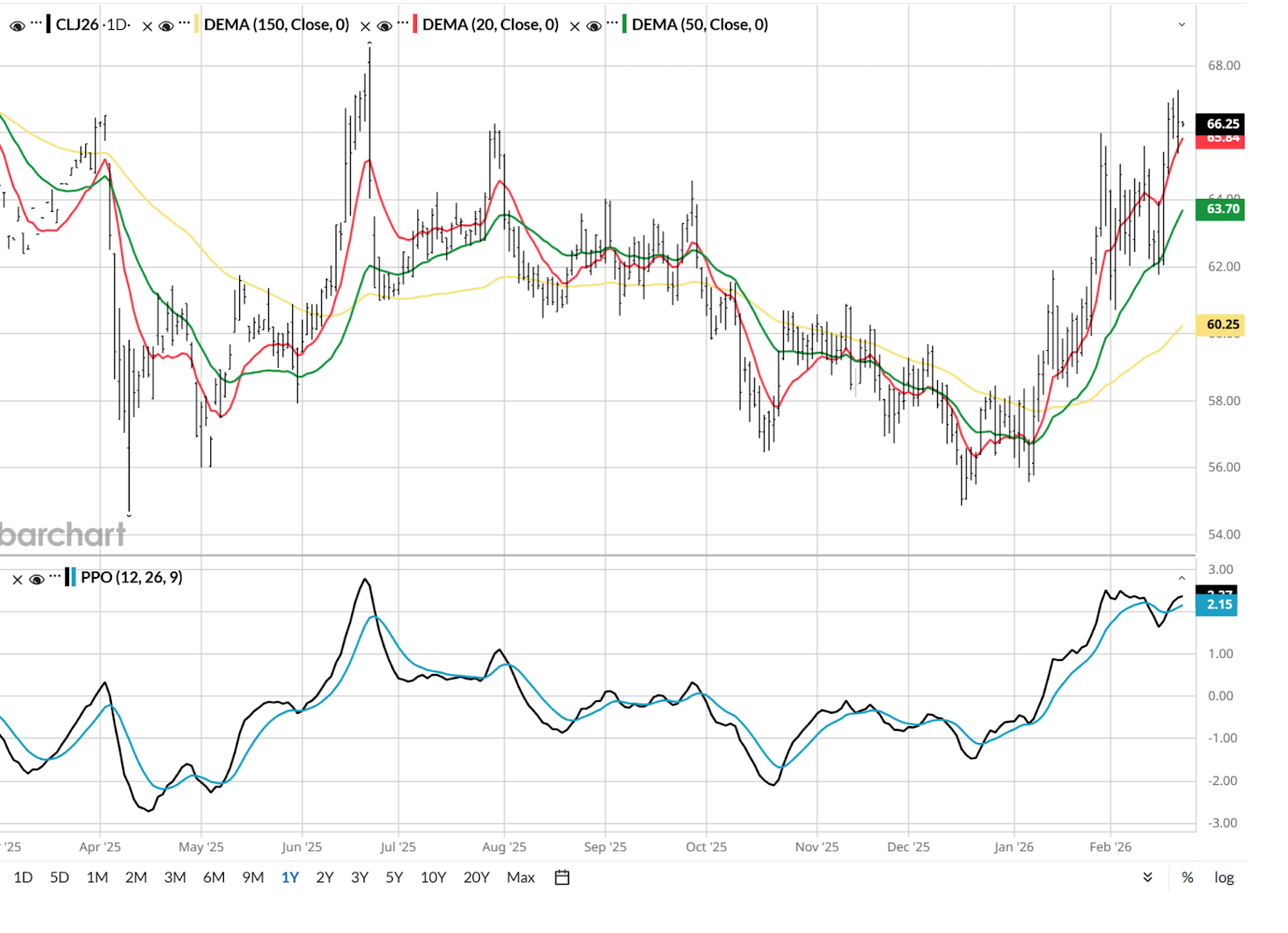
Offsetting this risk is the record-high production from non-OPEC countries, led by the United States. That supply prevented a full-scale price breakout earlier this month.
The Great Debate: Oil ETFs vs. Energy Stock ETFs
If you believe energy prices are headed higher, you have to decide if you want to own the stuff or the stocks. If oil is the commodity that you are after, the biggest of the exchange-traded funds (ETFs) in that space is the U.S. Oil Fund (USO). It has been around for nearly 20 years.
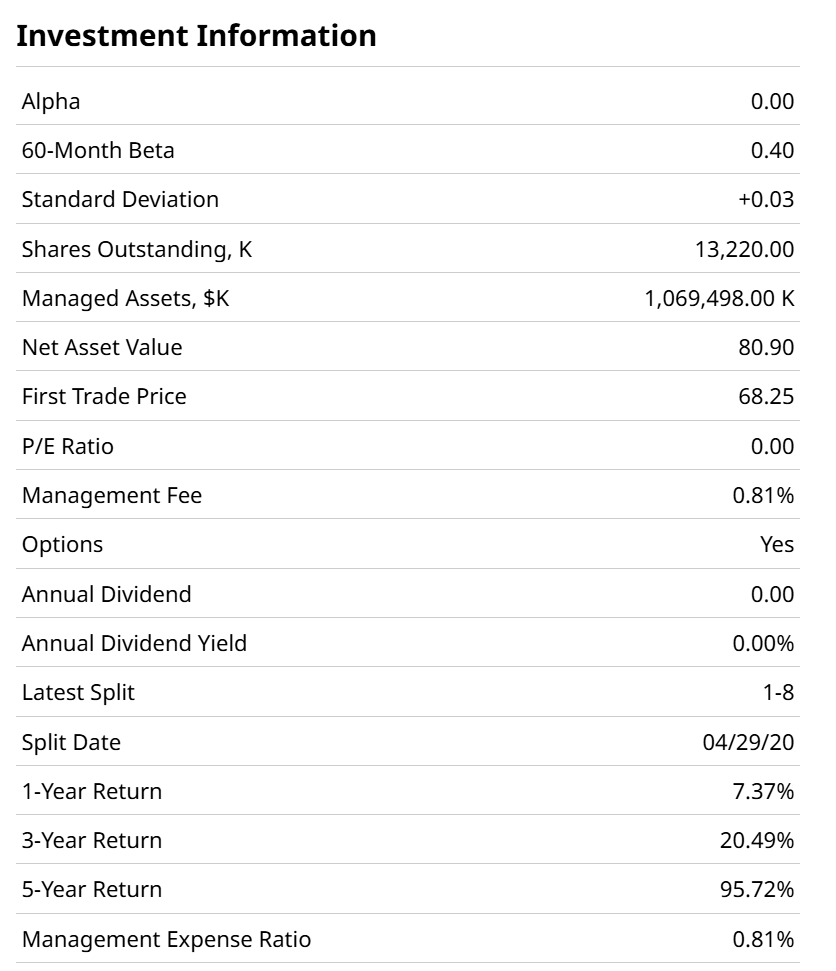
This is the most direct way to play a sudden spike in crude prices driven by a geopolitical event. If oil jumps $10 overnight, USO will reflect that move immediately.
Funds like USO use futures contracts, which can be a trap for long-term holders. When the market is in "contango" (future prices are higher than current prices), the fund loses value every month when it "rolls" its contracts, even if the price of oil stays flat. While this may be well-understood by longtime Barchart subscribers, given the commodity focus here for many years, ETF investors might not think to consider contango situations in assessing return and risk potential.
The other route is through either ETFs that own big integrated gas and oil stocks within the S&P 500 Index ($SPX) like the S&P 500 Energy Sector SPDR (XLE), or perhaps one like the US Oil & Gas Explor & Prod Ishares ETF (IEO). The latter, whose top 10 holdings are shown below, offers a bit more access to stocks beneath the very biggest names. XLE owns 26 stocks, while IEO owns nearly twice that amount.
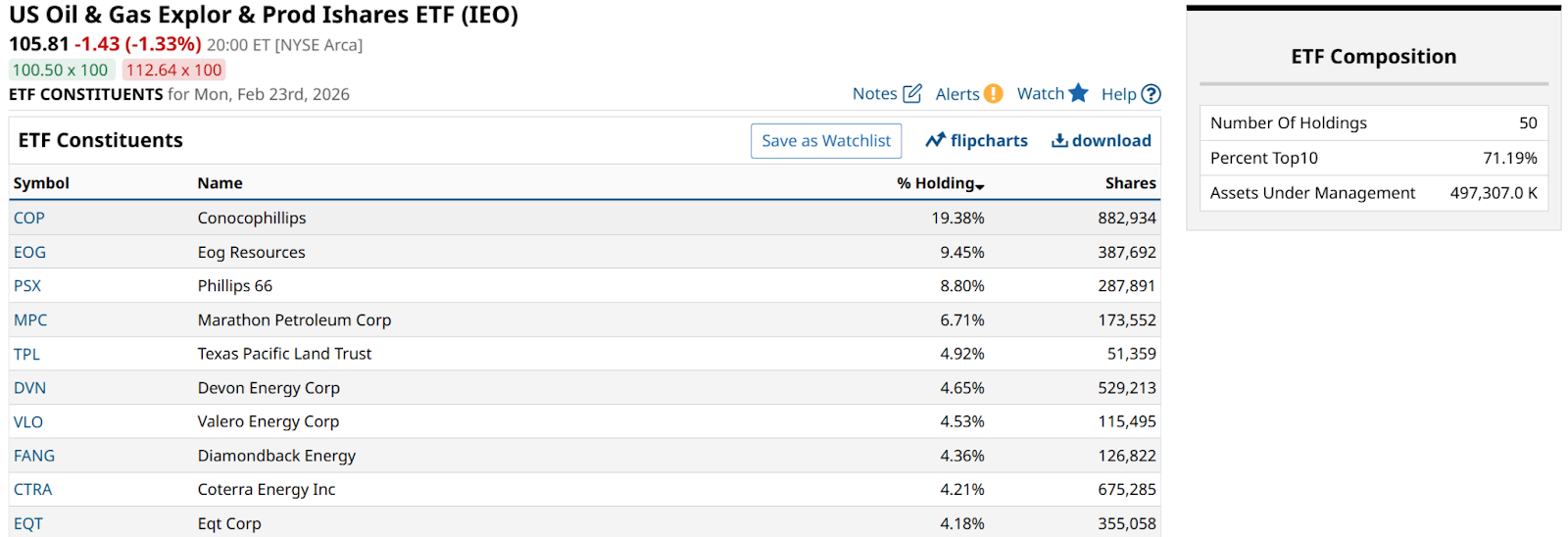
With equity ETFs as opposed to USO, you are buying profitable businesses, not just a price chart. Many of these companies have spent the last few years cleaning up their balance sheets and now offer reasonable dividends or share buybacks. They act as a yield-generator that can thrive, even if the price of oil and natural gas just stays steady.
But let’s face it, stocks are still stocks. If the broader S&P 500 crashes due to a recession, energy stocks might fall even if oil prices are rising, as investors sell whatever is liquid to raise cash.
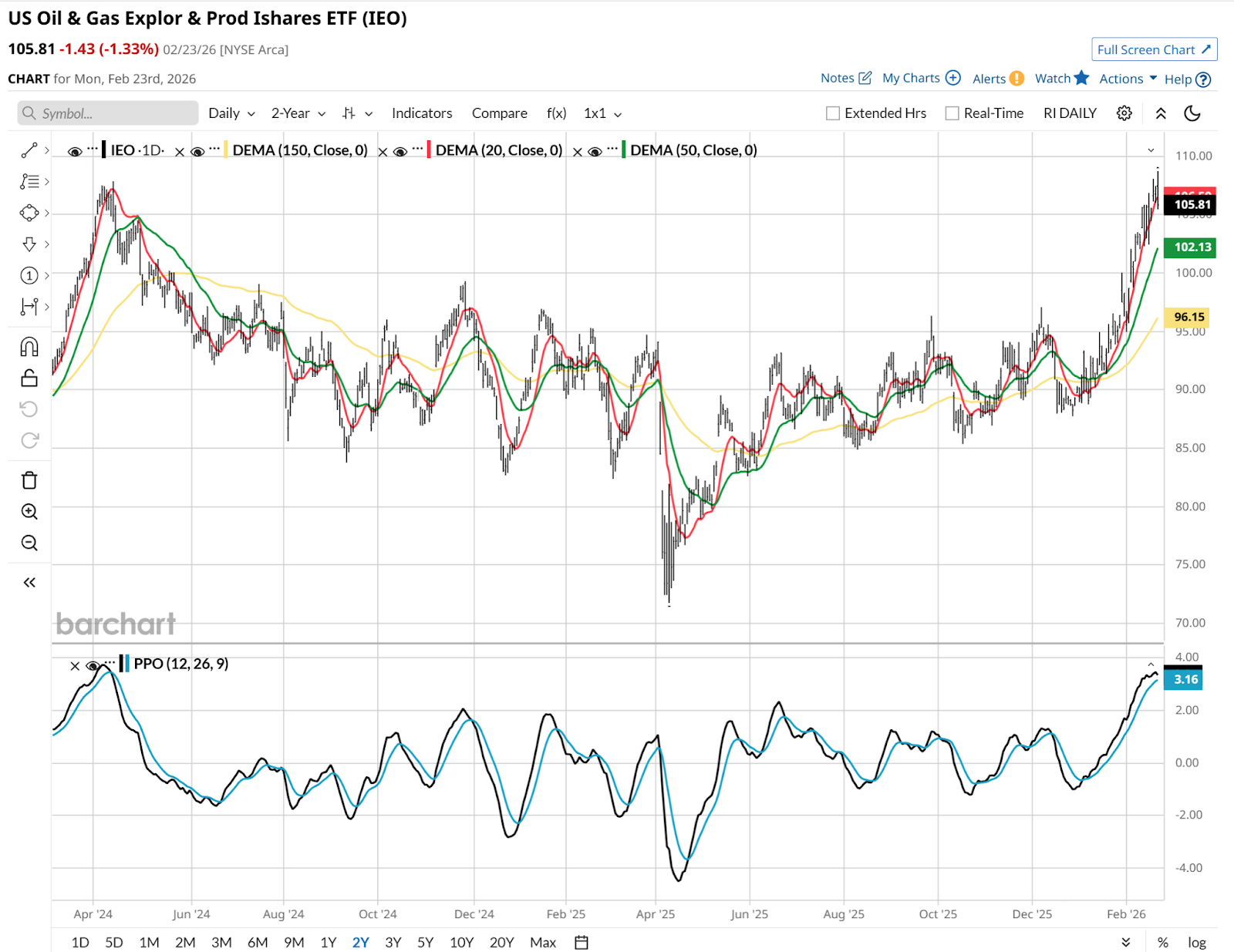
Why I’m Less Bullish on IEO Now Than I Was a Month Ago
Increasingly, I’m of the view that the recent spike in oil stocks, as indicated by the chart of IEO above, may have squeezed most of the juice out of this trade already. My conviction is strengthened when I look at a ROAR score analysis of IEO.
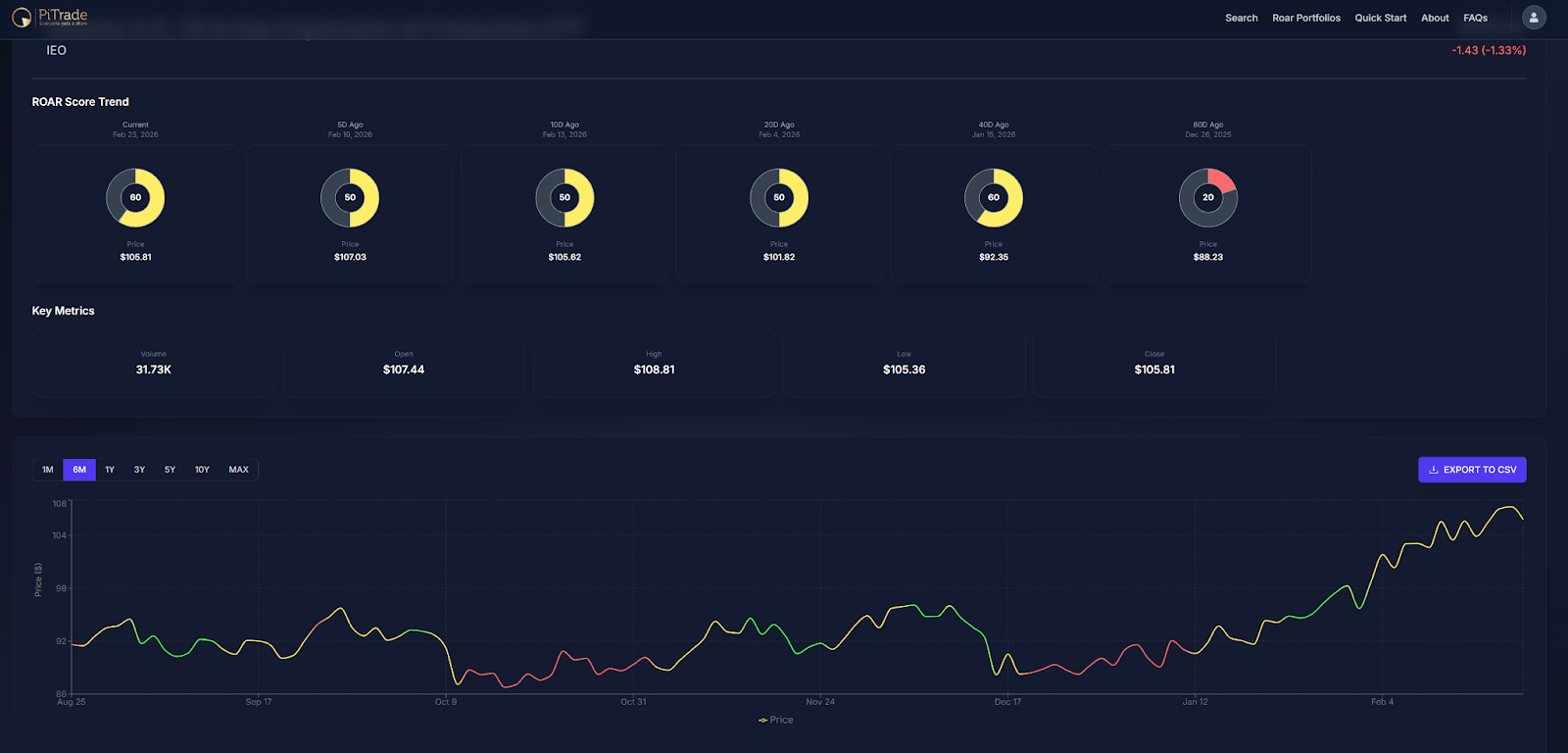
IEO has followed a classic ROAR pattern recently. In late January, its score broke out of the neutral range and hit 70, and then 80. Both are within the green zone, which indicates lower-than-normal risk of major loss in the security.
However, that was back at $94 a share. The next 10% move was much more likely to be higher than lower at that point, and at around $106 after a dip in Monday’s trading, that near-term objective was reached.
And now, the ROAR score has settled back into high-neutral territory (60). Buy the rumor, sell the news, eh?
Rob Isbitts created the ROAR Score, based on his 40+ years of technical analysis experience. ROAR helps DIY investors manage risk and create their own portfolios. For Rob's written research, check out ETFYourself.com.
On the date of publication, Rob Isbitts did not have (either directly or indirectly) positions in any of the securities mentioned in this article. All information and data in this article is solely for informational purposes. For more information please view the Barchart Disclosure Policy here.
More news from Barchart