Dr. Nicole Schrader discusses how facial aging progresses and why injectables may eventually reach limits for lifting and contouring.
PRINCETON, NJ / ACCESS Newswire / February 24, 2026 / Cosmetic injectables have become an essential part of modern facial rejuvenation, offering patients in their 20s through their 50s an accessible, non-surgical way to soften lines, restore facial volume, and enhance symmetry. While these treatments can be highly effective for early aging changes, they do have limitations. At a certain point, lifting procedures such as a facelift offer more predictable and longer-lasting improvement. Board-certified facial plastic surgeon Dr. Nicole Schrader of Schrader Plastic Surgery in Princeton, New Jersey, is addressing this increasingly common question: When is it time to transition from fillers and neuromodulators to surgery?
Patients often look for clear guidance on how injectable treatments differ from surgical facial rejuvenation, especially when trying to determine whether fillers can still provide the level of improvement they want or whether a more structural approach may be more effective. Understanding these distinctions helps individuals make informed decisions about the best way to address facial aging and maintain natural, balanced results.
Why Injectables Work Well for Certain Age Groups
Injectable treatments such as Botox, Jeuveau "Newtox", Juvéderm, Restylane, Voluma, and Radiesse are excellent solutions for early signs of aging. In younger patients-typically those in their 20s, 30s, and even early 40s-facial aging tends to be mild, with early volume loss or dynamic wrinkles being the main concerns. Injectable fillers can replenish subtle hollowing, improve contour, and refresh key areas of the face without surgery.
In a recent Instagram post, Dr. Schrader and Nurse Injector Clai Araya discussed how injectable treatments work well for early aging changes but eventually reach limits that make surgical options more effective. Early interventions can give patients a refreshed appearance with minimal downtime, making them especially beneficial for young professionals and parents managing busy routines. Many patients also choose these treatments to delay more invasive procedures until they feel ready.
Nurse Injectors Clai Araya and Sam Berry work closely with Dr. Schrader and are highly experienced in the use of fillers and neuromodulators. Their expertise plays an important role in identifying when non-surgical treatments remain effective and when surgical options should be considered.
Recognizing When Fillers Have Reached Their Limit
While fillers are versatile, there are structural concerns they cannot correct. With time, the deeper tissues of the face descend due to natural aging, collagen loss, and gravity. Volume replacement cannot fully lift these tissues, which is why overuse of fillers can sometimes lead to a "pillow-like" or heavy appearance.
Dr. Schrader notes that many patients reach a stage where fillers can provide improvement but no longer achieve the outcome they have in mind. Continuing to add product can distort natural proportions, especially in the midface and jawline, leading to results that no longer look balanced. When patients begin to feel that injectables are only offering short-term or partial improvement, it often signals that a more structural solution-such as a facelift-may give a better, longer-lasting outcome.
Chin and jawline enhancement is a good example. Mild recession can be improved with a small amount of filler, enhancing projection and sharpening the jawline. However, when significant recession or lower-face laxity is present, repeated filler sessions may not produce the desired contour. As Dr. Schrader explains, there are situations in which a chin implant or lower-face surgical lift provides far superior definition than ongoing injections.
Why a Facelift May Become the Better Option
A facelift addresses deeper facial structures rather than simply adding volume. Instead of filling areas that appear hollow or sagging, a facelift repositions the underlying tissues to where they were years earlier, creating a natural, youthful shape. This provides a smooth jawline, lifted cheeks, and more balanced contours-all without the overly stretched appearance that some people associate with older facelift techniques.
Dr. Schrader emphasizes that well-performed facelifts should look subtle and natural. Many of her patients comment that loved ones notice they look refreshed without recognizing they had surgery. Patients often appear ten to twenty years younger while still looking entirely like themselves. Her results focus on restoring harmony rather than creating dramatic or artificial changes.
Recovery expectations are another important consideration. Although many people believe a facelift requires two to three months of downtime, Dr. Schrader notes that this is rarely the case. In her practice, approximately half of facelift patients return to work after one week-particularly those with longer hair or the ability to use makeup to cover mild bruising. Others prefer to take two full weeks off to allow swelling to settle more completely. Light exercise typically resumes around the three-week mark, and most patients appreciate how quickly they can return to daily routines.
Patients Who Are Not Yet Ready for Surgery
Some individuals are not ready-emotionally or practically-for a facelift. For these patients, Dr. Schrader creates a tailored non-surgical plan that supports skin quality and slows visible signs of aging. These may include neuromodulators, light fillers, microneedling, PRP or exosome treatments, and customized skincare regimens. Her philosophy is to enhance skin structure and volume gradually and naturally, while discussing the possibility of surgery later if it becomes appropriate.
Treatment around the lips is one example. Rather than performing dramatic augmentations, Dr. Schrader prefers subtle lip hydration that restores youthful shape, improves fine lines, and enhances softness. Whether patients choose a non-surgical plan or a surgical one later, maintaining healthy skin is a core part of her long-term approach.
How Dr. Schrader Determines Candidacy
As a double board-certified facial plastic surgeon, Dr. Schrader combines medical expertise with an artistic understanding of facial aging. During consultations at her Princeton practice, she evaluates facial anatomy, skin elasticity, volume distribution, and overall goals. She also reviews a patient's history with injectables to understand how past treatments have performed over time.
Her comprehensive assessment helps patients understand:
When fillers can still offer effective improvement
Whether additional injectables would risk creating an unnatural appearance
When a facelift or chin implant would better address structural aging
What recovery expectations look like for each treatment option
What non-surgical treatments can support results before or after surgery
This collaborative process allows individuals to make informed decisions based on long-term results rather than short-term fixes.
About Dr. Nicole Schrader
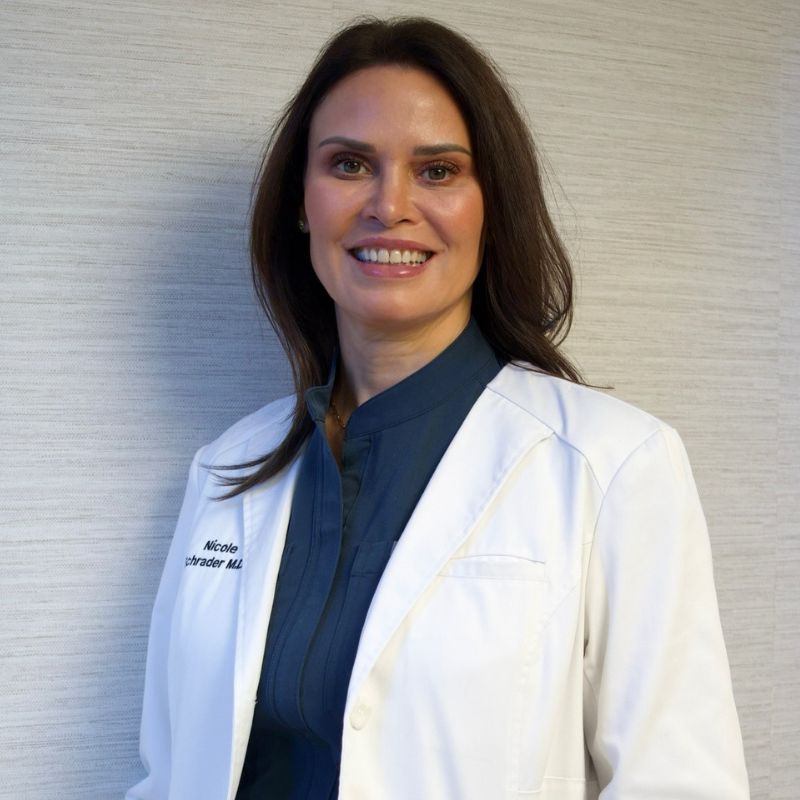
Dr. Nicole Schrader is a double board-certified facial plastic surgeon specializing exclusively in facial rejuvenation. Her practice, Schrader Plastic Surgery, is dedicated to providing natural, balanced results using both surgical and non-surgical techniques. Patients from Princeton, central New Jersey, and the surrounding region visit her for her experience in facelift surgery, eyelid rejuvenation, chin and neck contouring, and precision use of cosmetic injectables.
Contact Information
To learn more about facelift surgery, injectables, or to schedule a consultation, contact Schrader Plastic Surgery.
Media Contact:
Schrader Plastic Surgery
Phone: (609) 279-0009
Website: https://www.schraderplasticsurgery.com
SOURCE: Schrader Plastic Surgery
View the original press release on ACCESS Newswire