As interest in livestock guardian dogs continues to grow across North America, a quieter conversation is unfolding among landowners, farmers, and working dog advocates. The question is no longer whether guardian dogs are valuable, but whether the dogs being raised today still reflect the purpose they were created for.
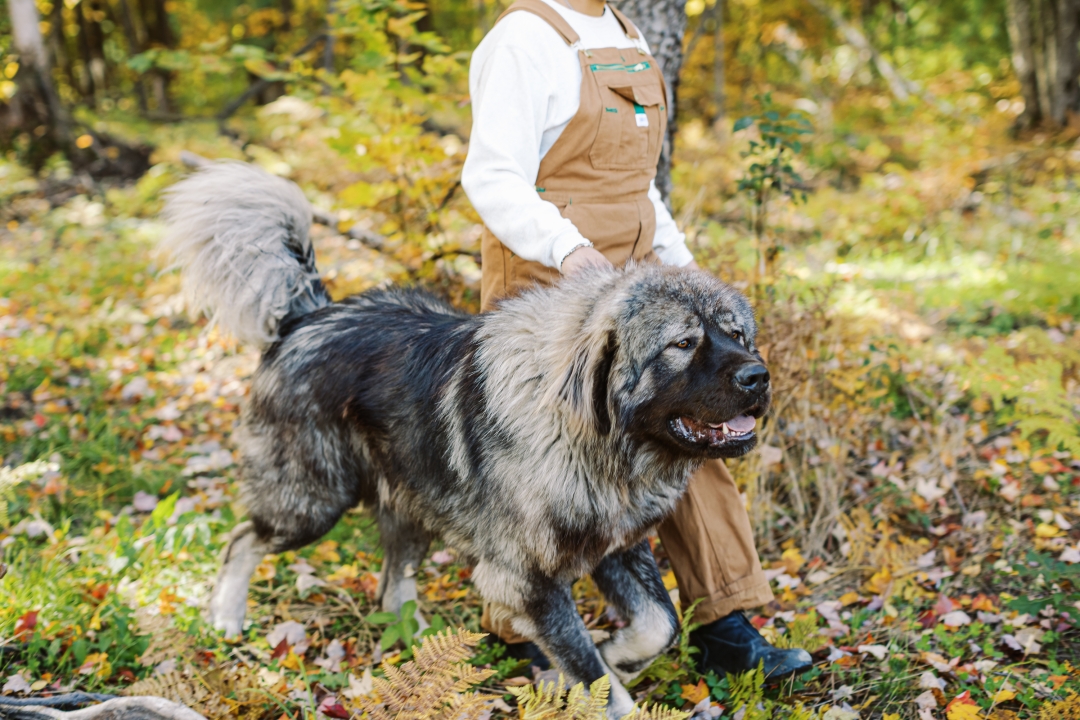
In Northern Michigan, Brotherbear Acres is approaching that question through preservation rather than production. The program focuses on Caucasian Shepherd dogs raised within active land and livestock environments, allowing instinct, judgment, and temperament to develop through real responsibility rather than controlled settings.
The Caucasian Shepherd, sometimes called the Caucasian Ovcharka, was shaped over centuries as a territorial guardian. These dogs were relied upon to make decisions without constant human direction, often working independently in harsh and unpredictable conditions. That context, long central to the breed, is increasingly absent as demand rises and breeding becomes more commercialized.
“When people talk about the breed today, the conversation often starts with size or appearance,” Sasha, a representative from Brotherbear Acres, said. “Historically, none of that mattered if the dog could not think clearly under pressure.”
Rather than accelerating placement or emphasizing volume, dogs are observed over time for awareness, stability, and suitability. Exposure to land and livestock is treated as a foundation, not an optional feature. According to those familiar with working guardian dogs, this distinction is becoming more important as more landowners seek animals capable of real world decision making rather than dependence on constant direction.
Within agricultural and homesteading communities, there is growing recognition that not every dog labeled a guardian is equipped for the role. Experience, environment, and selective restraint are increasingly viewed as markers of programs that prioritize function over trend.
“Once working traits are bred out, they do not return easily,” Sasha added. “Preservation requires patience, and patience is not something modern breeding always allows for.”
As interest in land based living and self sufficiency continues to expand, efforts to maintain functional guardian bloodlines remain largely out of public view. Yet their impact may prove significant as more people rediscover the need for animals shaped by purpose rather than convenience.
About Brotherbear Acres
Brotherbear Acres is a Northern Michigan based preservation program focused on raising Caucasian Shepherd guardian dogs within active land and livestock environments. The program emphasizes functional genetics, long term behavioral evaluation, and responsible placement aligned with the breed’s historical role as a working guardian.
Media Contact
Company Name: BrotherBear Acres
Contact Person: Sasha & Mae
Email: Send Email
Country: United States
Website: https://www.brotherbearacres.com/